Global bond yields surge is pressuring borrowing costs worldwide, with the 30-year US Treasury rate climbing to 5.33% on Tuesday, its highest level since June 2007, while the equivalent UK rate reached 5.85%. Germany and Japan recorded similar moves. The proximate drivers: rising oil prices, swelling government debt, and deepening uncertainty over the hundreds of billions of dollars flowing into artificial intelligence.
Hormuz crisis at the heart of the oil price spike
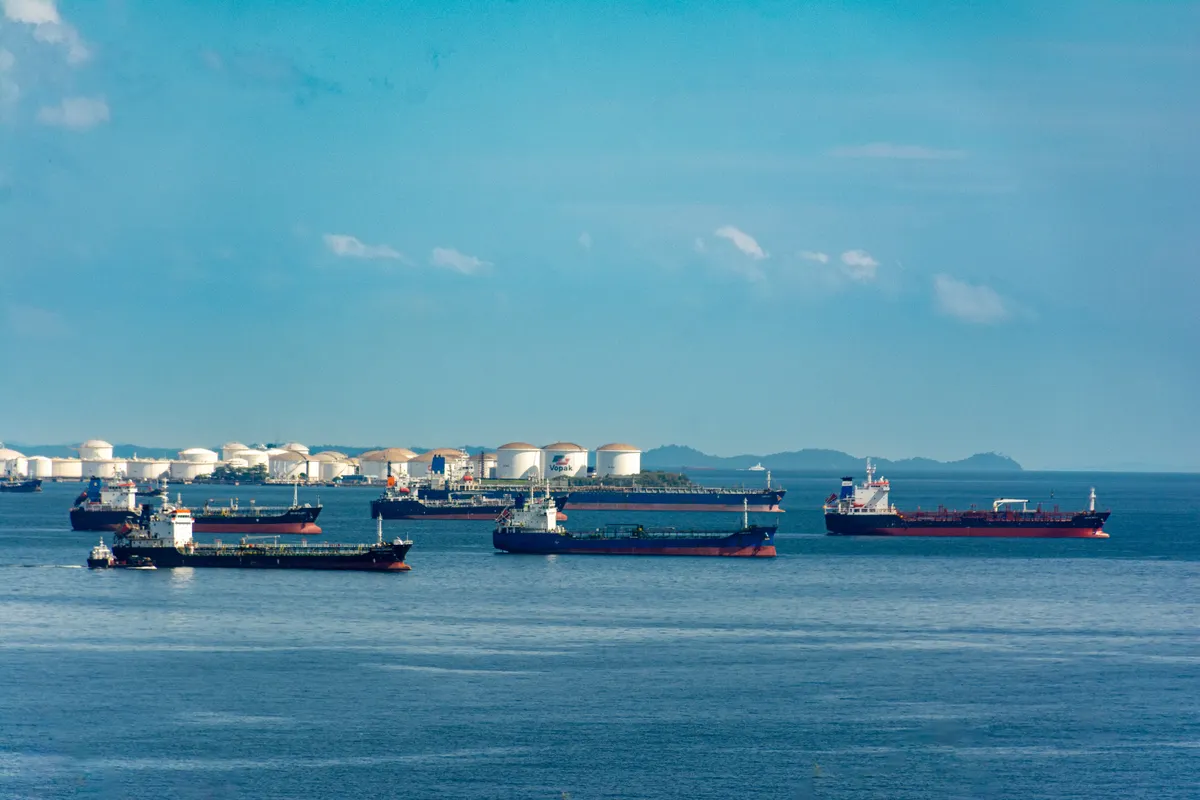
A barrel of Brent crude surpassed $90 on Tuesday following intensifying tensions in the Middle East. The Strait of Hormuz has been largely closed for almost six months as a result of the US-Israel war with Iran, disrupting global oil supply and pushing prices higher.
The passage carries around 20% of the world’s oil trade, according to CNBC. Ship traffic through the strait appeared to grind to a halt on Sunday, based on Kpler data, and a fragile ceasefire between Washington and Tehran is set to expire while talks have stalled.
President Donald Trump threatened to bomb Oman, a US ally, if it “gets in the way” of negotiations to reopen the waterway. Both the US and Oman have been negotiating separately with Iran over reopening the strait, which is critical to global oil supply and broader trade flows.
There are signs a resolution may be close. Iranian and Omani negotiators have finalised a draft deal to reopen the Strait of Hormuz and are awaiting final approval from Iran’s supreme leader, PBS News reported.
Elevated oil prices feed through the wider economy quickly. As well as pushing up the cost of motor fuel, they raise costs for businesses that rely on road transport and prompt companies to pass higher expenses on to consumers, adding to inflationary pressure.
Global bond yields surge driven by AI spending and government debt
John Canavan, lead analyst at Oxford Economics, told the BBC that the inflation risk from higher oil prices was not acting alone. High levels of government debt and uncertainty around the vast sums being invested into AI, and when that investment will pay off, were also pushing up long-term borrowing costs.
In the US, Canavan said long-term yields were being driven in part by a “record pace” of corporate borrowing in recent weeks, mostly for the development and build-out of AI and data centres. Bond investors, uncertain about the returns on that spending and the potential risks attached to it, are demanding higher yields in return for lending.
Canavan warned that higher yields would feed directly into costs for ordinary consumers. Mortgage rates could rise, as could borrowing costs on car loans. Companies facing higher borrowing costs might pass those on to their customers. “It adds to the overall inflationary impact,” he said. In the longer term, he cautioned, the risk was that higher inflation could slow economic growth.
Kim Forrest, chief investment officer at Bokeh Capital Partners, said the market environment was unsettling investors. “The yields are troubling people because it portends a tighter environment and it’s going to be more expensive to borrow money,” she said. “Especially in this whole AI thing where time to pay it back is uncertain. It makes for a nervous investor environment.”
UK fiscal rules under the spotlight
Bond investors have also been scrutinising government spending plans. In Britain, Prime Minister Andy Burnham has sought to reassure markets that he is committed to the government’s existing borrowing limits, its fiscal rules, after borrowing costs edged up when he took over the Labour leadership from Sir Keir Starmer this summer.
Before those commitments on fiscal rules, investors had considered that Burnham would be more likely to increase public borrowing, particularly following his comments that the UK had to “get beyond this thing of being in hock to the bond markets”.
Canavan described a broader “push back” from bond investors across the world over the financial policies and spending plans of a number of governments, with markets demanding higher compensation for the risks they see building.
The outcome of Hormuz negotiations remains the most immediate variable for oil prices and, by extension, inflation expectations. A deal awaiting a ruling from Iran’s supreme leader could, if approved, ease one of the key pressures currently driving the global bond yields surge.