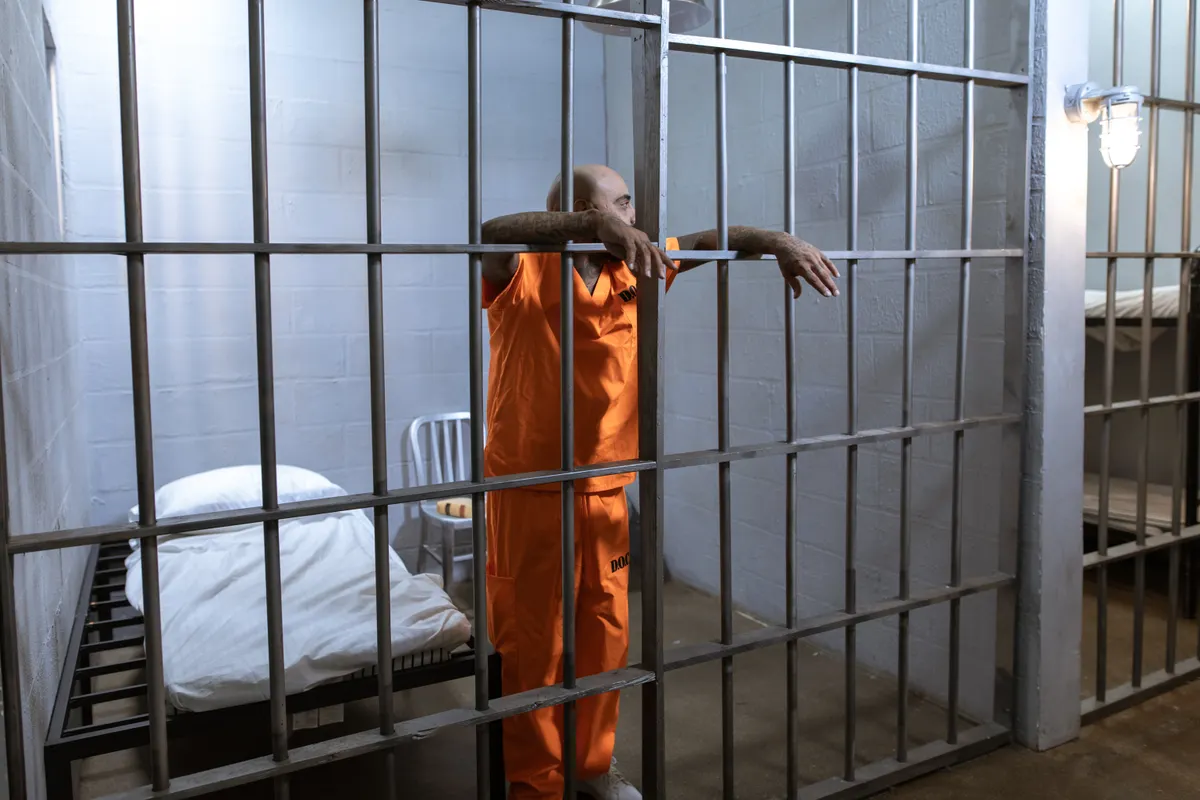
The government’s early prison release scheme could result in dangerous criminals being freed, the Conservatives have warned, as the prime minister confirmed manslaughter convicts would be excluded from the programme and prison space would instead be found partly by releasing inmates serving indefinite sentences.
Shadow justice secretary Nick Timothy told the BBC that blocking one group of dangerous offenders from the scheme meant Andy Burnham was ‘looking at releasing a different group of dangerous prisoners’. Timothy accepted that too few prisons had been built under the previous Conservative government.
IPP releases at the heart of the early prison release scheme row
Indefinite sentences, known as imprisonment for public protection (IPP), were handed to offenders between 2005 and 2012 who were judged to pose a serious risk of harm to the public. Under the scheme, a prisoner could only be freed once the Parole Board was satisfied they no longer needed to be confined for public safety.
According to Ministry of Justice data up to June this year, 2,271 people remain on IPP sentences. Of those, 856 have never been released because the Parole Board judged it was not safe to do so.
Timothy argued that those still held on IPPs are, by definition, dangerous. ‘They’ve all been considered by independent expert assessors who have concluded that they are not safe to release and they would be a danger to the public,’ he told the BBC.
Burnham told BBC Breakfast on Sunday that he had applied ‘common sense’ on IPPs. He said he faced a situation where people on those sentences who had ‘more than served their time’ were not being released, while others who had committed ‘very serious crimes’ were being released early. The government plans to table legislation to terminate IPPs by the end of this Parliament. Burnham conceded that among those offenders there would be some who would ‘pose a risk to communities’, and said a cross-party oversight group would be established.
What the scheme means in practice
Some 4,500 prisoners are now expected to start being released in tranches from October to ease overcrowding in jails. That figure is lower than initially expected after the government excluded rapists, those convicted of serious child sex offences and grooming offences, and now those convicted of manslaughter.
For those who do qualify, the Institute for Government explains that prisoners convicted of less serious offences, who currently serve 40% or 50% of their sentence in custody, will leave prison after a third of their sentence. Fewer exclusions had been expected to ease pressure on jails, but each new category removed from the scheme narrows the headroom available.
On 3 August, the prison population in England and Wales stood at 86,495, around 97% of useable capacity. Victims Minister Alex Davies-Jones told the BBC the system ‘will be run very tight’ but that capacity would be sufficient for the revised numbers. She said plans to deport foreign nationals on sentencing and to re-purpose women’s prisons would also help tackle overcrowding.
‘Our plan is to deport [foreign nationals] on sentencing so that they don’t serve a day at His Majesty’s and at the taxpayers’ pleasure,’ Davies-Jones said. Asked whether deported offenders would serve sentences in their country of origin, she said ‘that would be for the determination of their country of origin’. She said those released early would continue to be monitored.
Voices on both sides of the IPP debate
Former Conservative justice secretary Sir Robert Buckland told BBC Radio 4’s Today programme that while some IPP prisoners are a ‘real danger to the public’, such cases are ‘dwarfed’ by instances where people are recalled to prison for breaching licence conditions rather than committing further crimes.
Shaun Lloyd is one such case. He served eight years following a conviction for street robbery and, once released, remained on indefinite licence. His mother, Shirley Debon, told the Today programme that Lloyd had never committed a violent crime and called his latest recall ‘totally unfair’. When recalled, she said, he had become drug-free and was close to completing an apprenticeship. Debon is campaigning for a broader inquiry into IPPs, saying people are ‘living in limbo’.
Ending indefinite sentences for those still serving them would require new legislation, meaning it could be years before additional space is freed up. Justice Secretary Alex Norris is expected to update Parliament on Tuesday with further details on the changes to the early release scheme.