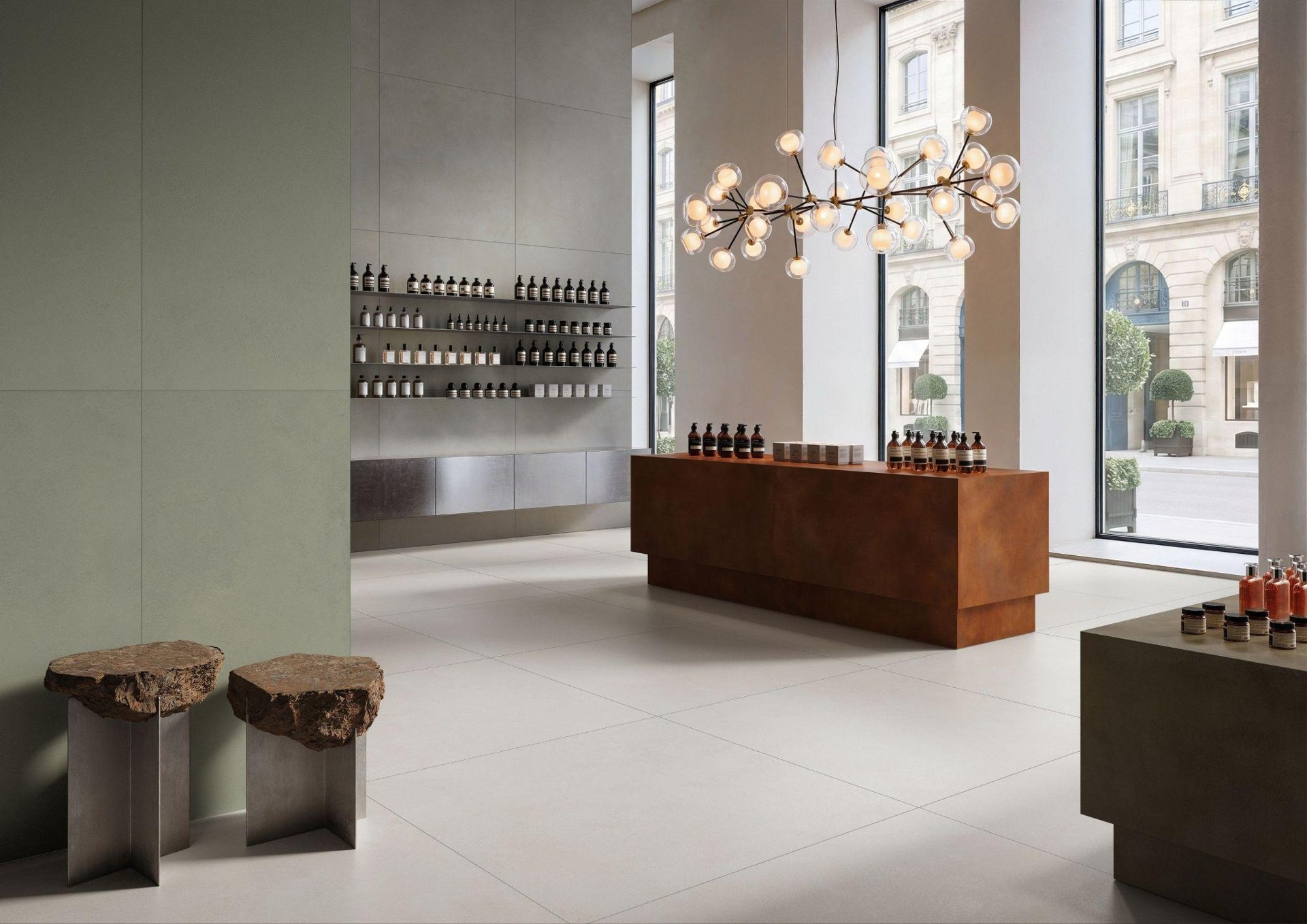
Industry professionals at Cersaie 2026 came away with a fresh look at The Code concept and a series of innovations, as VitrA Tiles framed its presentation around the Material Intelligence approach.
Bologna, Italy: Designers, customers, architects and professionals from across the sector were guests of VitrA Tiles at Cersaie 2026, the international exhibition for ceramic tiles and bathroom furnishings, staged in Bologna, Italy between 21 and 25 September. The result was a stand shaped by the idea of Material Intelligence, where the brand unveiled its innovations and 2027 collections.
“Every material has a code. Material Intelligence deciphers it.” Fresh meaning for materials drawn from nature is what this statement promises, and it underpins the design thinking of VitrA Tiles, which achieves that goal by blending design expertise, research and advanced technology. The outcome is a range of original surfaces that spark fresh ideas for today’s architecture, built upon nature’s technical and aesthetic potential.
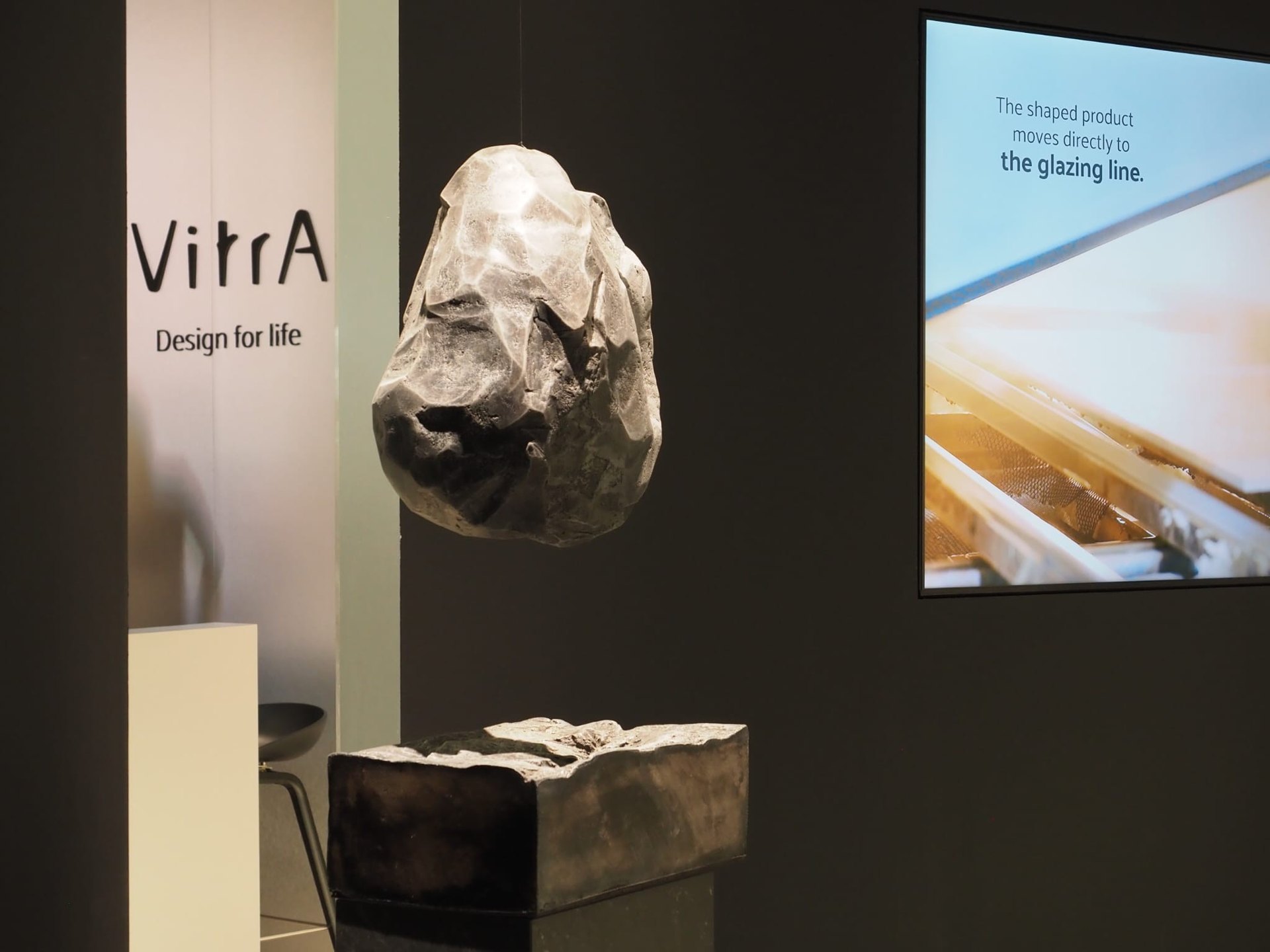
A Threefold Design Vocabulary
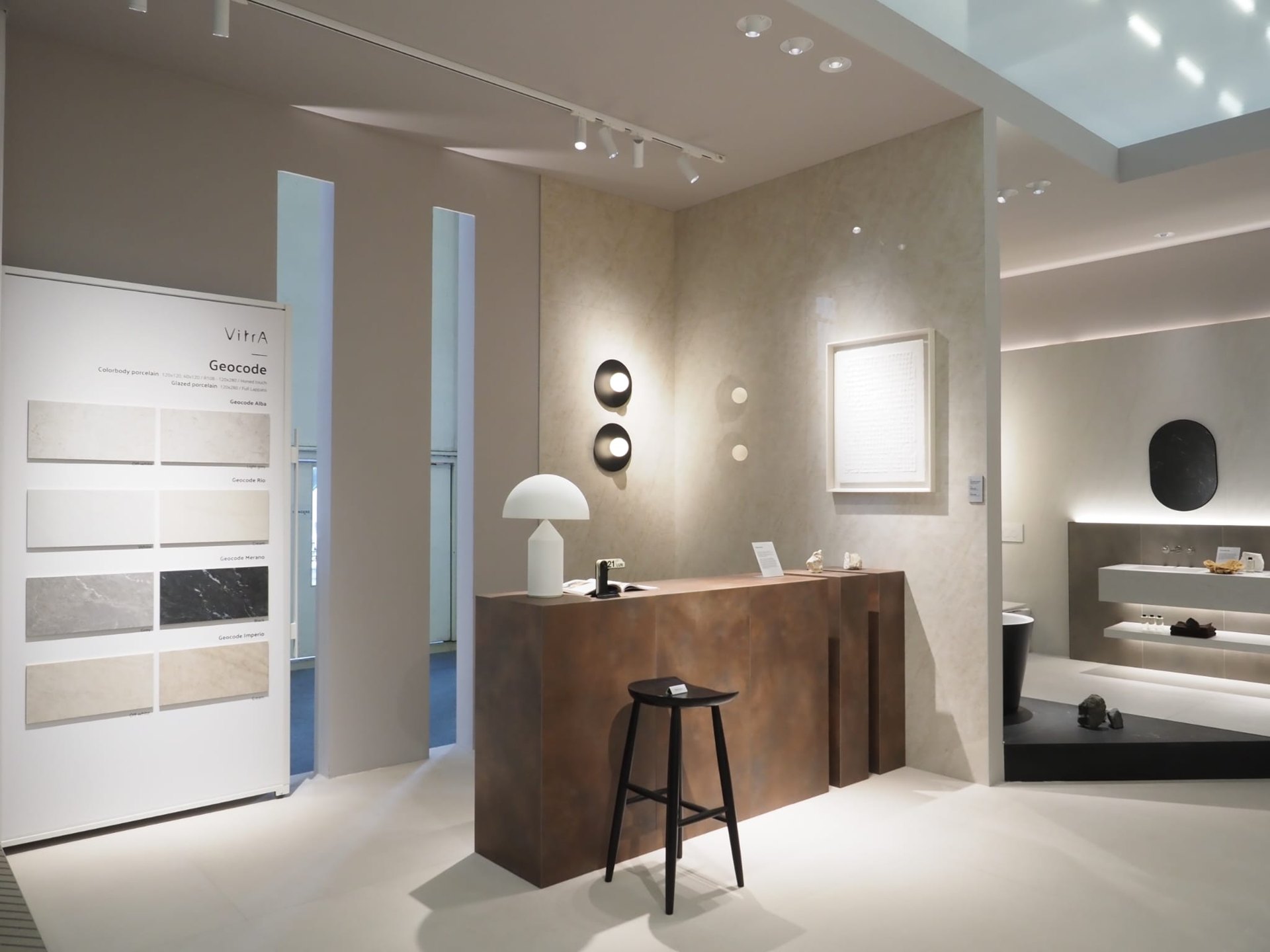
Visitors to Cersaie could explore the Metacode, Resincode and Geocode ranges at the VitrA Tiles booth, each one born from a distinct design language within The Code concept.
Contemporary interiors gain a refined, balanced, minimalist surface aesthetic from Resincode, which takes its lead from the mineral-rich, porous texture found in natural concrete, with its layered surface effects and natural transitions. The varied geological heritage of natural stone reaches ceramic surfaces in a contemporary interpretation through Geocode, which draws on quartzite, gneiss, Spanish limestone and marble and is offered in four separate surface typologies: Rio, Alba, Merano and Imperio. Industrial character meets a refined aesthetic in Metacode, which transfers the soft reflections and subtle tonal transitions of a patinated metal texture onto ceramic surfaces in three different versions, toned in copper, gold and iron.
Fresh Technology on the Stand
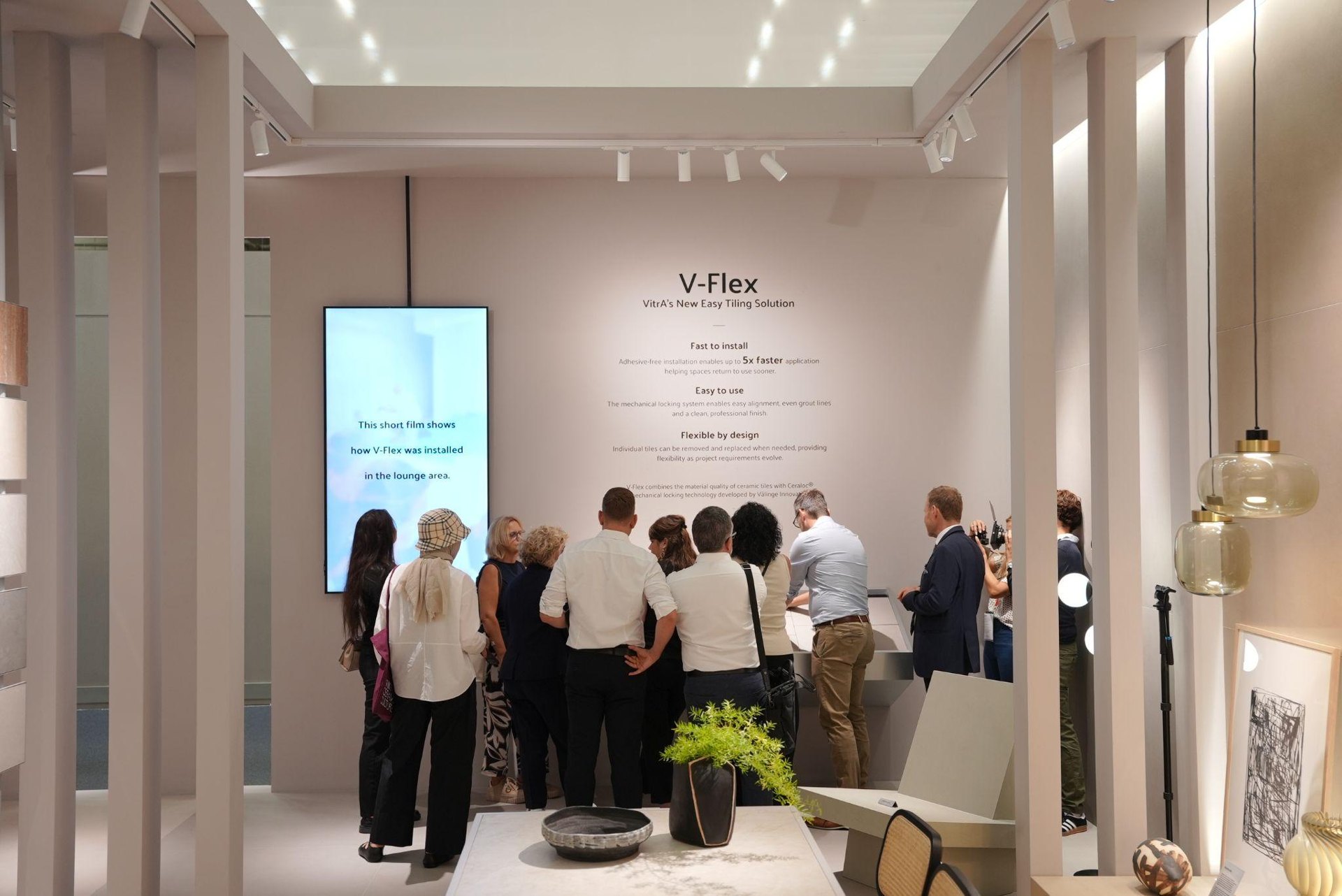
Its new collections were not the only launches: VitrA Tiles also brought innovations named V-Tone and V-Flex to Cersaie 2026.
No adhesives are needed with V-Flex, an installation system for tiles built on Välinge’s Ceraloc® locking mechanism. Application runs as much as five times quicker than with conventional bonded tiles, because special side profiles let the tiles connect mechanically. The results are precise alignment, a clean and professional finish, and even grout lines. Maintenance and repair become far simpler, since individual tiles can be taken out and replaced whenever necessary, a significant advantage. Acoustic comfort is another benefit. Hotels, retail stores, commercial spaces, offices, store chains, educational facilities and showrooms are among the settings for which V-Flex is recommended.
Colour stays consistent and design integrity holds across different surfaces with V-Tone, which tackles tonal differences arising in ceramic manufacturing. VitrA Tiles is still in the process of building V-Tone technology into its manufacturing lines.
About the Company: VitrA Tiles
Home to the engers, VitrA and Villeroy & Boch brands, VitrA Tiles is one of Türkiye’s leading ceramic tile exporters, both within Europe and to the EU. The company, established in 1991 in Tuzla, Istanbul, and in 1992 in Bozüyük, Bilecik, now operates two production plants employing roughly 2,000 people, with an annual capacity of 31 million m². Recognition from the Global Lighthouse Network, a World Economic Forum initiative, for its Industry 4.0 progress and digital transformation places its Bozüyük Plant in the front rank of the world’s most sophisticated tile factories. Integrated solutions in ceramic tile that improve living spaces worldwide are the result, as VitrA Tiles combines design excellence, sustainability and advanced manufacturing.