A book about waste reduction in the Arctic and Antarctic and a new agreement with organisers of London Climate Action Week have placed Turkey’s environmental credentials firmly on the international stage this August, months before the country hosts the COP31 climate summit.
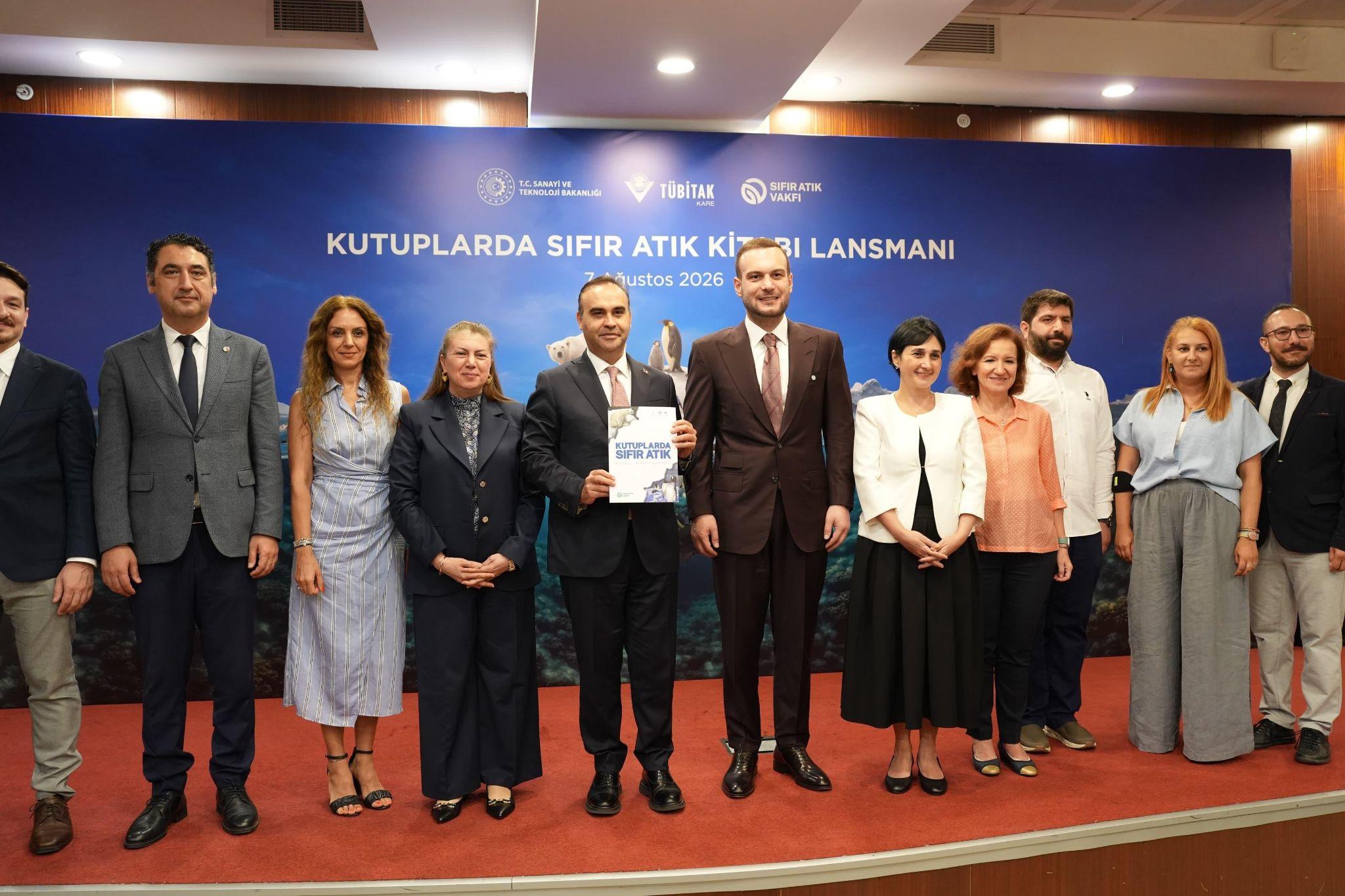
The two developments, a fortnight apart, were announced by the The Zero Waste Foundation, the Turkish body that has driven the country’s zero waste programme since it began in 2017. On 7 August the Foundation published “Zero Waste in the Polar Regions”, a book produced with the Polar Research Institute of TÜBİTAK, Turkey’s Scientific and Technological Research Council. Ten days later, on 17 August, the Foundation signed a cooperation protocol with London Climate Action Week covering climate action, zero waste and the circular economy.
For a UK audience, the timing matters. London Climate Action Week draws together government officials, city representatives, business leaders, academics and civil society groups from around the world, and the new protocol gives Turkey’s zero waste and circular economy work a direct route into that network ahead of a summit, COP31, that Turkey is due to host.
A book that joins two national projects
Mehmet Fatih Kacır, Turkey’s Minister of Industry and Technology, said the polar publication brought together two initiatives that both started in the same year. “The Zero Waste initiative launched under the leadership of H.E. Emine Erdoğan has grown step by step from a national initiative into a global one,” he said.
He linked that programme to Turkey’s polar science efforts. “At the same time, we began organising scientific expeditions to Antarctica and the Arctic under the auspices of the President of the Republic of Türkiye, enabling Turkish scientists to strengthen the country’s presence in polar research. Through this book, these two initiatives have come together,” Kacır said.
The book itself draws on contributions from 18 scientists who have taken part in polar research, and covers the scientific, technical, administrative and communication sides of applying zero waste principles in some of the world’s most remote environments. Rather than focusing narrowly on waste collection, it examines how scientific expeditions are planned, how materials and resources are used, and how energy, water and logistics are managed on site.
The central argument is that waste should be reduced before it is created, resources used efficiently, and the environmental footprint of research activity kept as small as possible. The publication also frames the Arctic and Antarctic as early warning signs for the planet, arguing that environmental changes recorded there have implications that reach far beyond the poles themselves.
The work reflects the broader zero waste vision associated with H.E. Emine Erdoğan, who founded the Zero Waste Movement and now chairs the United Nations High-Level Advisory Board on Zero Waste, as well as serving as Honorary President of the Zero Waste Foundation.
Formal ties with London’s climate calendar
The second development, the protocol signed on 17 August, creates a formal partnership between the Zero Waste Foundation and London Climate Action Week. According to the two organisations, the agreement is intended to strengthen knowledge exchange, support joint initiatives and deepen international dialogue on zero waste and the circular economy.
It was signed by Samed Ağırbaş, President of the Zero Waste Foundation and COP31 High-Level Climate Champion, and by Nick Henry, Founder and CEO of Climate Action.
Ağırbaş said he expected the agreement to translate into concrete collaboration over the coming months. “After this cooperation protocol, I hope we will carry out strong work and organize joint events at COP31 and London Climate Action Week,” he said.
London Climate Action Week itself brings together representatives from government, cities, business, finance, academia, civil society and local communities, making it one of the more wide ranging fixtures on the international climate calendar. By securing a formal link with that event, the Zero Waste Foundation has given Turkey’s experience in zero waste and circular economy policy a direct channel into a London based network that reaches well beyond national borders.
Why it matters before COP31
Neither development changes the substance of Turkey’s zero waste programme, but together they signal how the country intends to present that programme internationally as it prepares to host COP31. The polar research book gives the initiative a scientific dimension, rooted in TÜBİTAK’s Antarctic and Arctic expeditions, while the London protocol gives it an institutional foothold in one of the world’s most closely watched climate events.
Officials involved in both announcements were careful to stress that the underlying approach is not limited to recycling or conventional waste management. The polar research book, in particular, frames zero waste as a matter of planning, resource efficiency and reduced environmental impact from the outset of scientific activity, rather than simply dealing with waste once it has been produced.
For now, the practical focus remains on exchange between the Zero Waste Foundation and the London Climate Action Week network: shared knowledge, joint initiatives and coordinated events. COP31, when it takes place, will provide the wider diplomatic stage on which that cooperation is expected to be tested, with both sides pointing to Turkey’s polar research and its zero waste record as the basis for closer international engagement on climate and resource use.
The developments announced this August, a scientific publication and a cross border partnership signed within ten days of each other, illustrate how Turkey is seeking to connect domestic environmental policy with the international climate diplomacy taking shape around COP31.