The economic hit from Brexit is large enough that, had it been avoided, it could have eliminated Brexit NHS waiting lists and funded a world-class health service, a professor at Stanford University has said in an interview with The Independent.
Nick Bloom said the UK economy had shrunk by between 6 and 8 per cent of GDP as a result of leaving the European Union, through lost trade, increased red tape and prolonged uncertainty over the final deal. That loss, he said, is close to the 9.7 per cent of GDP spent on health before the Covid pandemic.
NHS budgets ‘could rise by two-thirds’
Bloom told The Independent: ‘Imagine getting that back and spending all that money we lost on the NHS. Suddenly, you would go from the current NHS to one that would be amazing. Budgets would go up by about two-thirds; probably, waiting lists would disappear. Hospitals would be refurbished, you’d have better-paid doctors, better-paid nurses, better equipment.’
He put the figure in personal terms, saying it amounted to ‘something like £3,000 a year, per typical British person, that we’ve lost’. Roughly half of that, he said, stemmed from Brexit itself making it harder for British firms to trade with Europe, which accounted for about half of UK trade before the vote. The remaining half he attributed to the ‘mess’ of approving the final deal, which left businesses pausing investment and hiring across multiple prime ministers, votes and negotiations.
Bloom dismissed the Leave campaign’s claim that Brexit would free up £350m a week for the NHS, calling it ‘exactly and perfectly wrong’.
Investment and productivity fell sharply, research shows
The scale of the economic drag is supported by wider research. According to Stanford Institute for Economic Policy Research, investment fell by between 12 and 18 per cent and employment by between 3 and 4 per cent as a result of Brexit. Separate analysis by EconoFact estimates that UK business investment was, on average, 18 per cent lower than in comparable countries, while employment and labour productivity were, on average, 4 per cent lower.
UK in a Changing Europe has noted that the impact was hard to see in 2017–18 but accumulated steadily over the subsequent decade as uncertainty persisted, trade barriers rose, and firms diverted resources away from productive activity.
Bloom is the co-author of research placing the overall GDP reduction at 6 to 8 per cent, which he described as higher than previously thought.
Farage described as a ‘spectre’ on economic recovery
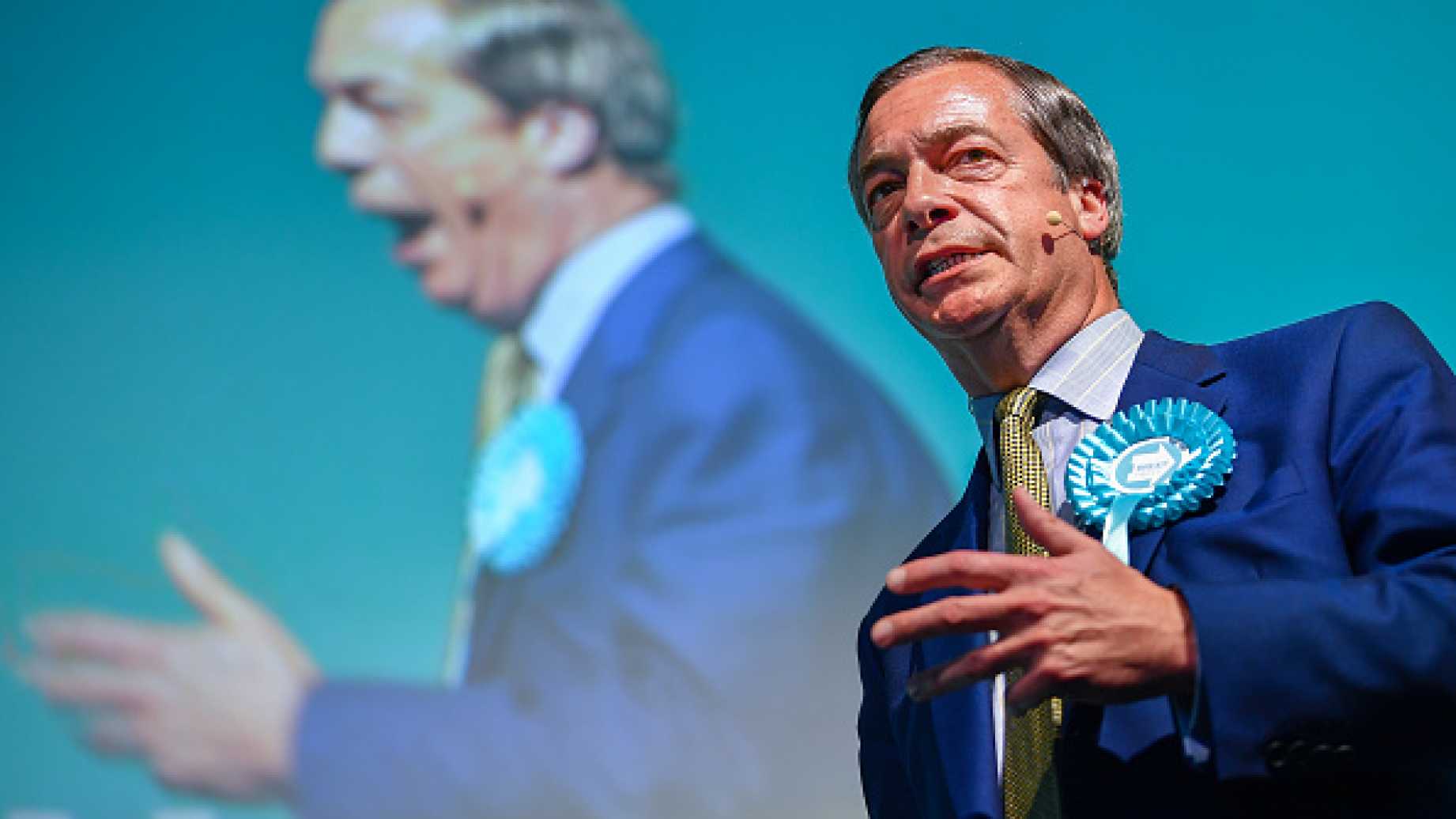
Bloom urged the government to seek closer ties with the EU to limit further damage and recover some of the losses. He acknowledged the political difficulty of doing so, pointing to Reform leader Nigel Farage as a ‘spectre’ still impeding the UK’s economic recovery.
Referring to Andy Burnham’s position, Bloom said: ‘He’s got many balls in the air, but he’d like to get closer to the European Union. Why? Because it would improve the economy. Why? Because that would mean he doesn’t have to put up taxes or cut spending. But the big cost of it is this, Farage, and the Brexiteers waiting in the wings, ready to pounce on him.’
He added that Burnham, like every politician in a similar position, was trying to ‘get closer, but say another thing, which is we are independent and have our sovereignty’.
Former Tory health secretary Stephen Dorrell, responding to Bloom’s analysis, said the original Leave claim that Brexit would unlock more NHS funding was ‘fundamentally dishonest on a Trumpian scale’. He said leaving the EU had ‘undermined the ability of the UK economy to create successful business and create wealth’.
Bloom was speaking to The Independent as part of its Europe: The Way Back campaign, which calls for the UK to rebuild its relationship with Europe.