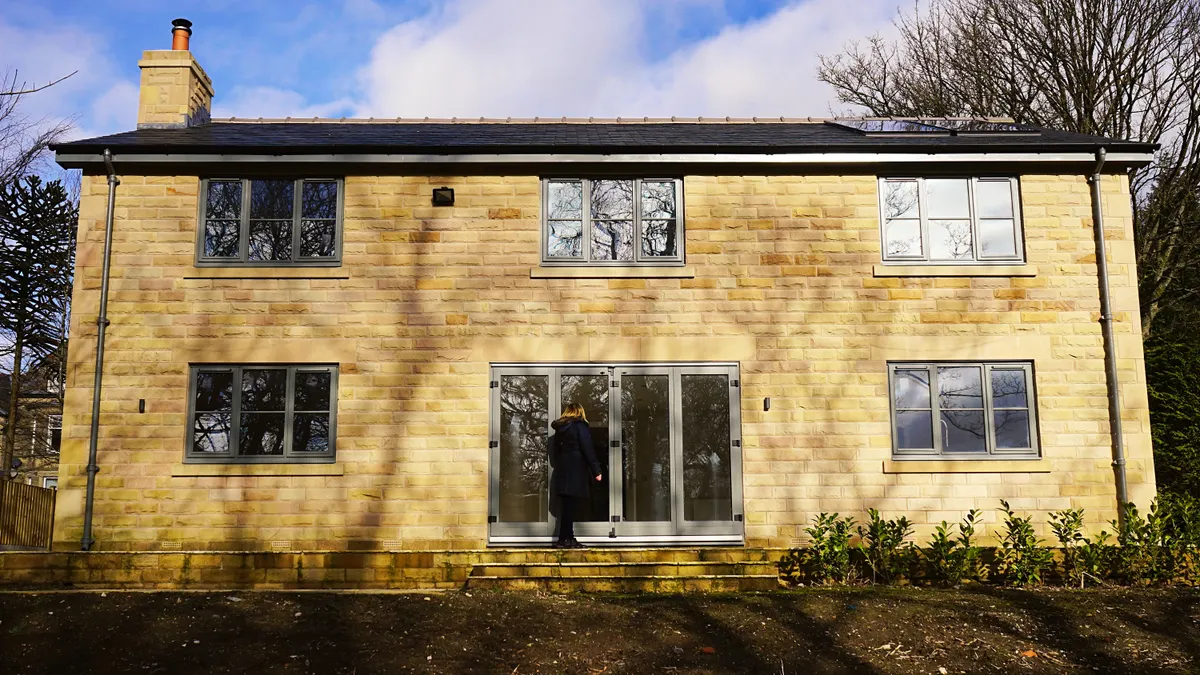
Complaints about new-build homes across the UK have more than tripled in a year, as families describe being forced from properties riddled with structural faults, mould and damp, with calls growing for a mandatory oversight scheme to replace the current voluntary system.
The New Homes Ombudsman Service (NHOS) received just over 1,800 complaints in 2025-26, up from fewer than 600 the previous year. Defects and snagging were the most common issues raised. The ombudsman says the rise partly reflects more homeowners becoming eligible to use the service and greater public awareness of it.
New-build homes complaints UK surge as ombudsman closes 904 cases
According to the New Homes Quality Board (NHQB), the total number of cases closed by the NHOS reached 904 in 2025/26, while cases resolved through early resolution rose from 186 to 575 over the same period. Registered developers covered by the scheme increased from 461 to 581 between 2024/25 and 2025/26, extending the reach of the Code across England, Scotland and Wales.
Yet coverage remains far from universal. The NHOS is a voluntary scheme set up by major stakeholders in the building industry, and although registrations rose by 26% in the past financial year, roughly a third of all new homes still sit outside it. Evidence submitted to the UK Parliament Housing Committee indicates that around 35-40% of new homes are built by developers outside the scheme, and that a disproportionate share of the most serious complaints the NHOS receives, involving severe structural faults, major workmanship failures and unsafe elements, come from buyers of those properties.
The scheme also excludes shared-ownership purchases and build-to-rent properties, leaving large categories of residents without recourse to the service.
Families describe stress and health consequences
Among those affected is Elissa, who bought a four-bedroom home in North Lincolnshire with her partner Johnnie just before Christmas 2024. An independent snagger produced a report identifying around 150 faults, including wonky walls, bowing windows and a poorly fitted kitchen. A separate independent surveyor’s report, seen by the BBC, described mortar work as “low standard” and noted the home’s outer walls had an “inward lean” with a deviation of up to 50mm. Structural warranty providers say the maximum permitted deviation is 8mm over a three-metre stretch.
The couple have now moved out for the second time this year while repairs are carried out. Elissa, who has a long-term health condition, says she has gone to hospital several times with chest pains attributed by medics to stress. Developer Stonebridge Homes apologised and said it had arranged alternative accommodation and all associated relocation costs. The company has also offered to buy the property back, but the couple say they would be around £100,000 out of pocket once renovation costs, solicitors’ fees and Stamp Duty are factored in.
Other residents in Somerset, London and Essex have described similar experiences: black mould discovered days after moving in, collapsed ceilings in a London apartment block, and a social housing property full of damp on arrival.
In Croydon, residents of The Fold (a 35-storey complex completed in 2022) reported mould spreading rapidly through the building. Mphango Simwaka, who moved in that year, says the conditions worsened her health. After residents raised complaints with landlord Legal and General, Mphango was told to move out late last year while renovations were carried out. Nearly a year on, she has not moved back. Legal and General told the BBC residents at The Fold had been compensated with £8,500 on average.
Government plans statutory scheme from September 2026
Housing Secretary Angela Rayner told the BBC the government planned to establish a mandatory ombudsman as soon as parliamentary time allowed, stating homes should be “safe” and “built to last”. The government accepted a recommendation from the Competition and Market Authority in October 2024, and an outline timetable has been set, with implementation of the statutory scheme scheduled to begin in September 2026.
Chief ombudsman Nigel Cates has said the current patchwork leaves residents not covered by the NHOS facing codes “not designed to help homeowners”. He told the BBC it was “critical for the whole industry” that everyone had “the same protections, access to an ombudsman service and an impartial investigation”.
John Cooper, director of snagging company New Home Quality Control, warned that as housebuilding accelerates toward the government’s target of 1.5 million homes in England by 2029, the industry could be “setting itself up for a huge fail”. His inspectors frequently find breaches of building regulations, including problems with insulation, brickwork and carpentry. “We see some horrors,” he said, adding that current pre-handover checks were insufficient.
The Home Builders Federation said it supported a statutory ombudsman covering all new-build buyers, but wanted the government to reduce what it described as the “regulatory burden”, including taxes and policy costs that had made many potential sites and businesses “no longer viable”.