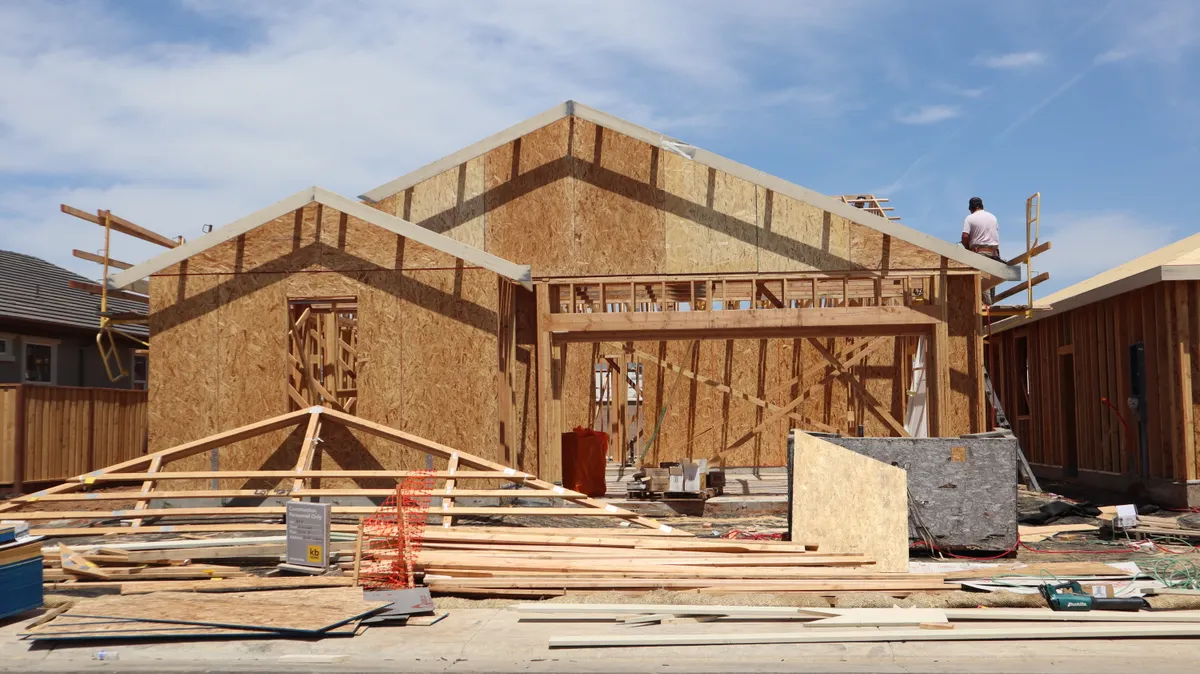
England’s social housing waiting lists stand at 1.34 million households as the government announces funding for more than 70,000 social and affordable homes to be built across six regions over the next decade, as part of a broader £39bn housebuilding programme.
Funding has been allocated to Greater Manchester, the West Midlands, West Yorkshire, South Yorkshire, North East England, and Liverpool. A separate £6bn had previously been announced for London, which will receive the largest share of overall funding, though no figure has been given for how many homes will be built in the capital. More than £16bn remains to be allocated outside London.
Housing Secretary Angela Rayner said she and the prime minister were doing everything possible to get councils building again. Speaking on a visit to a housing development in south-east London, she told the BBC she understood the frustration of people in temporary accommodation or on waiting lists.
Social housing waiting lists and the homelessness crisis
The scale of demand is stark. The 1.34 million households on social housing waiting lists as of March 2025 represent the latest government figures, and homelessness has continued to rise under Labour to record levels. Data released earlier this month suggested 177,530 children were in temporary accommodation.
Among them is Natasha, 22, who has been living in a hotel in Milton Keynes for four months with her five-week-old son Zayd. She spent the final months of her pregnancy and the first weeks of her son’s life there. She told the BBC’s Your Voice she has no idea how long she will remain, having been told the placement would only be temporary.
‘I’m just scared when he gets older, when he starts crawling around, I can’t even allow him to crawl in such a place like that because it’s so dirty,’ she said. While pregnant, her room became infested with ants. She shares a kitchen with around 60 other residents and says she does not always feel safe using the shared space. She describes the experience as feeling ‘like a prison’, with visitors barred, leaving friends and family unable to help.
Organisations including the National Housing Federation and homeless charities have previously agreed that at least 90,000 social homes would need to be built each year to meet demand. In 2024 to 2025, around 65,000 new affordable homes were completed in England. Of those, just over 12,000 were built for social rent, the highest figure since 2013 to 2014.
Political row over scope and funding of the social housing programme
Of the 70,000-plus homes announced, 60% will be for social rent, meaning rents are set at roughly half of market rates with strict eligibility criteria. Housing Minister Matthew Pennycook told BBC Breakfast the government had taken a ‘pragmatic approach’ and wanted to get money out the door, and said the next tranche of funding would be more focused on council houses.
Ministers are understood to have decided against channelling more of the first tranche to councils because they did not believe councils would be in a position to build the required number of homes. Half of councils do not currently own or build their own homes. In the 1950s, councils were building almost 200,000 new council homes a year.
Greater Manchester Mayor Andy Burnham had previously called for the entire £39bn budget to be spent on homes for social rent. ‘I would actually devote all of it to social housing,’ he told The Social Housing Podcast in May. Pennycook said he did not accept that the outcome meant Burnham had failed to meet his prior commitment.
Charlie Berry, policy manager at housing charity Shelter, said the announcement was ‘not near the level we need to truly tackle that backlog and end homelessness’, but described it as a ‘significant improvement’. She added she would ‘love’ Rayner to commit to an annual target for socially rented homes built.
Conservative shadow housing secretary Sir James Cleverly called the announcement ‘sleight of hand’, saying: ‘The small print shows homes won’t have to be delivered until 2039.’ He added: ‘Fewer homes will be delivered than previous programmes in this Parliament as social rent is more expensive. Labour have scaled back their affordable housing programme and expect us to thank them for it.’ The Conservatives have also said they would end provision of social housing for foreign nationals in England if elected, estimating that would free up 228,144 homes for British families.
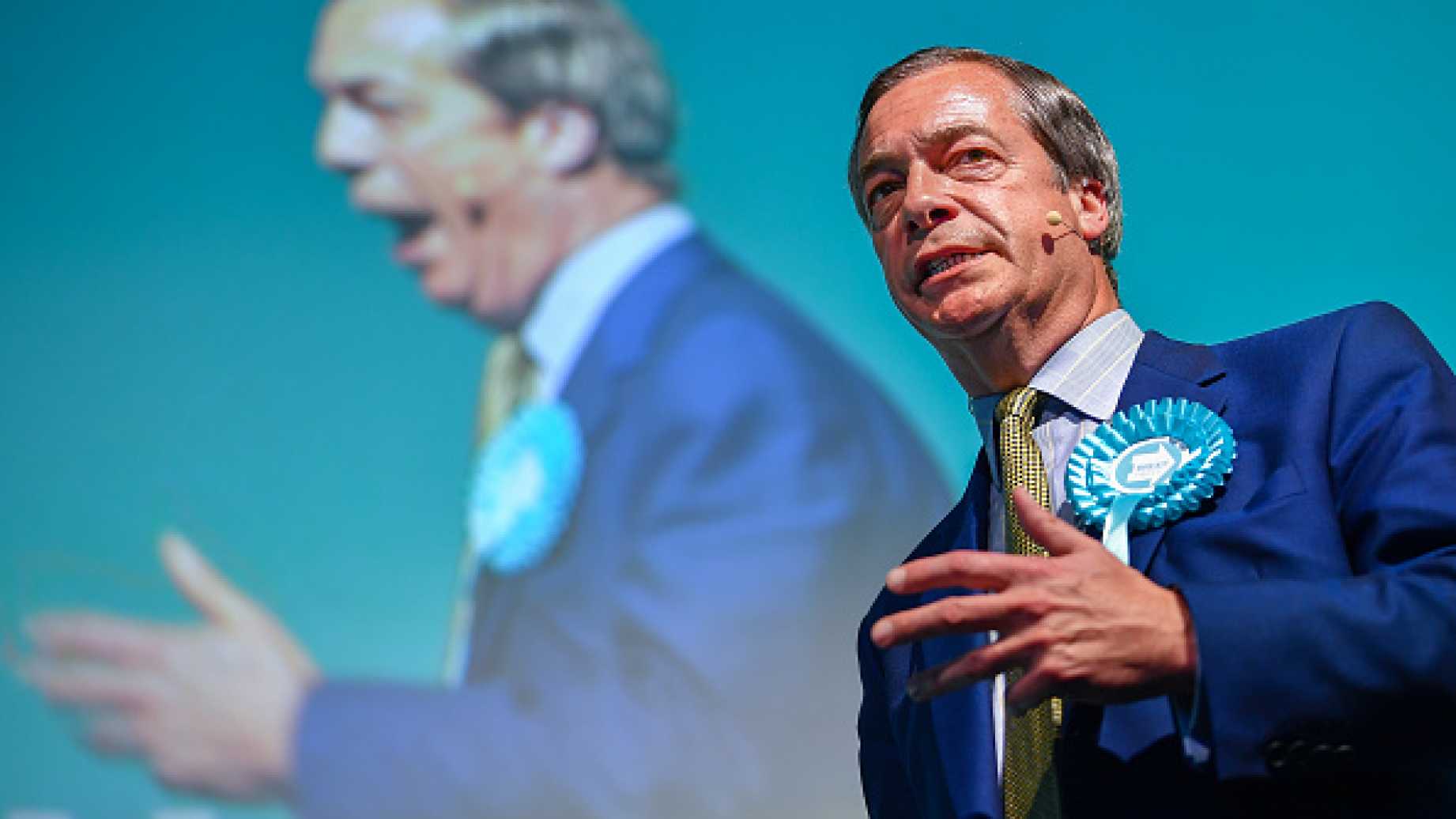
Liberal Democrat housing spokesperson Gideon Amos welcomed parts of the plan but said it ‘won’t cut it’ and called for a programme that meets the scale of the challenge. Reform UK separately announced plans to prioritise British-born workers under 35 when allocating social housing.
Labour’s 1.5 million homes target under pressure
The Monday announcement sits within Labour’s wider pledge to build 1.5 million homes by 2029. BBC Verify has been tracking progress using government statistics on Energy Performance Certificates, which must by law be issued for each newly created dwelling. The latest EPC data suggests around 203,000 new homes were delivered in England in the 12 months to June 2026. To reach the 1.5 million target, at least 300,000 would need to be built annually. Labour is not currently on track to meet that goal.