Ukrainian President Volodymyr Zelensky has warned that Russian airspace civilian aviation faces growing danger as Ukraine escalates its drone campaign, with the International Civil Aviation Organization (ICAO) calling on its members Wednesday to ensure aircraft safety.
Zelensky used his nightly video address on Tuesday to tell airlines, insurers and airports that ‘the Russian sky is becoming completely dangerous’. Ukraine has since formally notified the UN of the risks.
Zelensky’s warning on Russian airspace civilian aviation
Speaking directly to carriers that continue operating into Russia, Zelensky said: ‘There will simply be drones in Russia’s skies on a scale that has to be taken into account.’ He directed the warning at airlines flying to major Russian cities including Moscow and St Petersburg.
He was careful to draw a distinction, saying ‘Ukraine does not threaten civilian aviation as such, not a single civilian aircraft’, but made clear the sheer volume of drone activity would make Russian skies hazardous.
Foreign Minister Andrii Sybiha confirmed on X that Ukraine had officially notified ICAO that Russian airspace was not safe for civilian aviation. ‘We want to prevent unintended incidents,’ he said, adding: ‘The war is returning home to Russia.’
According to Le Monde, ICAO responded on Wednesday by calling on its member states to ensure the safety of civilian aircraft. The agency identified long-range weapons systems, unmanned aircraft systems, global navigation satellite system radio frequency interference, and advanced air defence systems as among the military technologies jeopardising civilian aviation in the region.
Airlines monitoring situation as flights continue
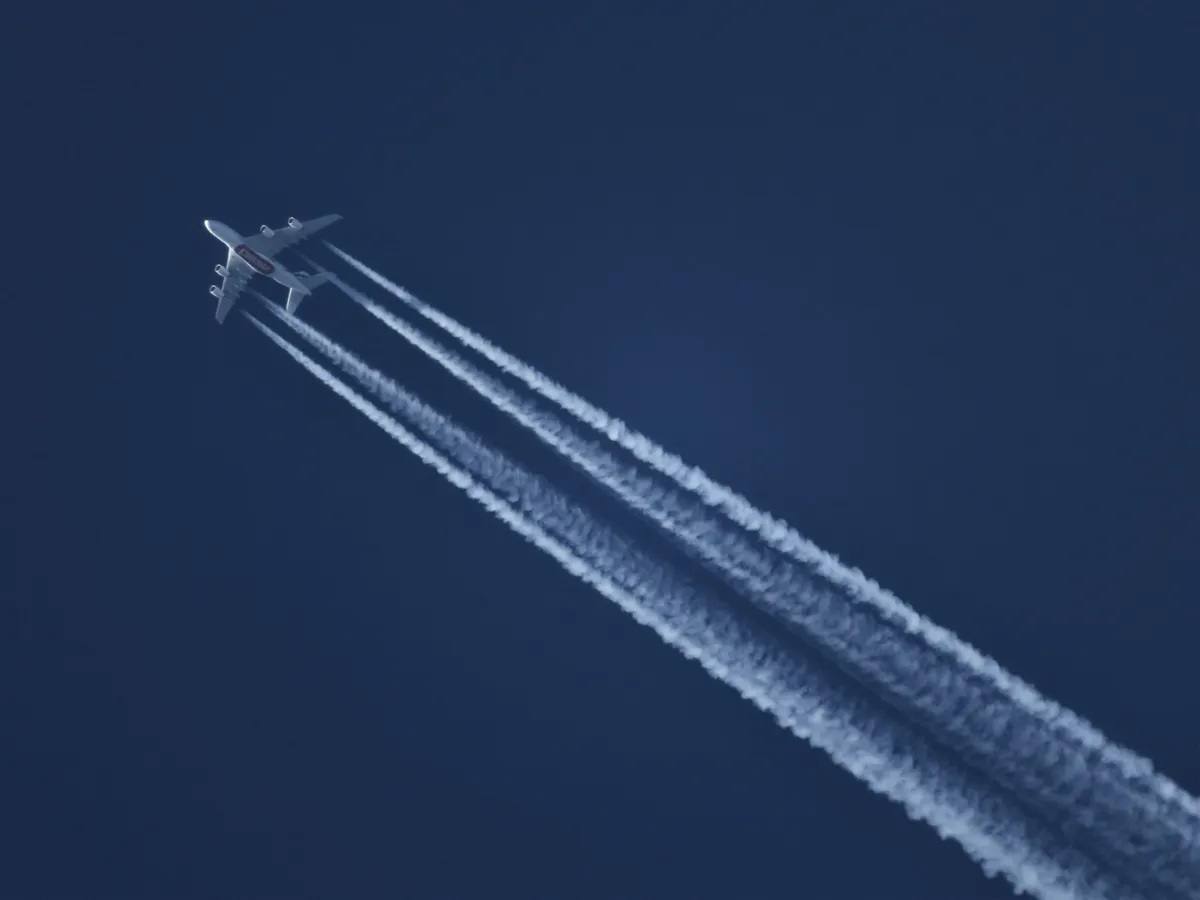
Most Western commercial airlines have not flown over Russia since the full-scale invasion began in February 2022. However, carriers from Turkey, China and Gulf states continue to use the route, saving time and fuel on journeys between Asia and Europe.
On Wednesday afternoon, flight tracking website FlightRadar24 showed many planes still flying over Russia, including traffic into and out of the two main Moscow airports, which recorded some delays but few cancellations.
Qatar Airways, which flies into Moscow and routes through Russian airspace to reach the US west coast, said its flight planning was ‘guided by rigorous and continuous monitoring of airspace security, safety assessments, and geopolitical developments’. Turkish low-cost airline Pegasus cancelled its flights to Russia on Tuesday and Wednesday, citing ‘technical and operational reasons’, but said future flights ‘are operating as scheduled’. FlyDubai, an Emirati government-owned carrier, said it would ‘closely monitor the evolving situation in the region and adjust our flight schedules and routings as necessary’.
Osprey assessment and the ‘Kovyor’ disruption risk
Aviation risk advisory firm Osprey Flight Solutions, in an alert to clients, said the majority of Ukraine’s drone and missile strikes were likely to occur within 300km (186 miles) of the border, but that daily attacks deeper inside Russia were almost certain to continue this year. ‘There is also a realistic possibility that the frequency of Ukrainian strikes will continue to increase in the short term deep inside Russian territory,’ the alert said, adding that ‘miscalculation and/or misidentification is likely in areas related to the Ukraine conflict.’
Ukraine does not need to target airports directly to cause disruption. Under Russia’s air defence ‘Kovyor’ (carpet) plan, flights are suspended whenever a drone is detected in a relevant area. Its drone attacks have for months led to disruption at some of Russia’s biggest airports, with all four major Moscow airports at times forced to halt arrivals and departures. Several cancellations were reported on Wednesday.
Putin calls warning ‘state terrorism’
Russian President Vladimir Putin, speaking to reporters at the Shanghai Co-operation Organisation summit in Kyrgyzstan, said Zelensky’s comments amounted to a ‘declaration of state terrorism’. He added: ‘They are asking us to resume negotiations… but you don’t negotiate with terrorists.’
Putin acknowledged that Ukrainian strikes had damaged infrastructure inside Russia, while insisting that ‘only 10%’ of oil refineries remained to repair. Heavy Russian strikes killed 12 people in Ukraine on Tuesday, with further attacks on Odesa, Sumy and Kyiv reported on Wednesday. Russia’s military has said it is preparing ‘massive’ strikes on Ukrainian power stations.
The risks to civilian aviation in active conflict zones carry a well-known precedent. Last year, the UN aviation agency ruled that Russia was responsible for the downing of Malaysia Airlines Flight MH17 over eastern Ukraine in July 2014, in which all 298 people on board were killed. The Kremlin has always denied responsibility. In 2024, Putin apologised to the president of Azerbaijan over the downing of a commercial airliner in Russian airspace, in which 38 people were killed, saying the incident occurred as Russian air defence systems were repelling Ukrainian drones. ICAO’s call to members on Wednesday signals the body is treating the latest escalation as a live safety concern.