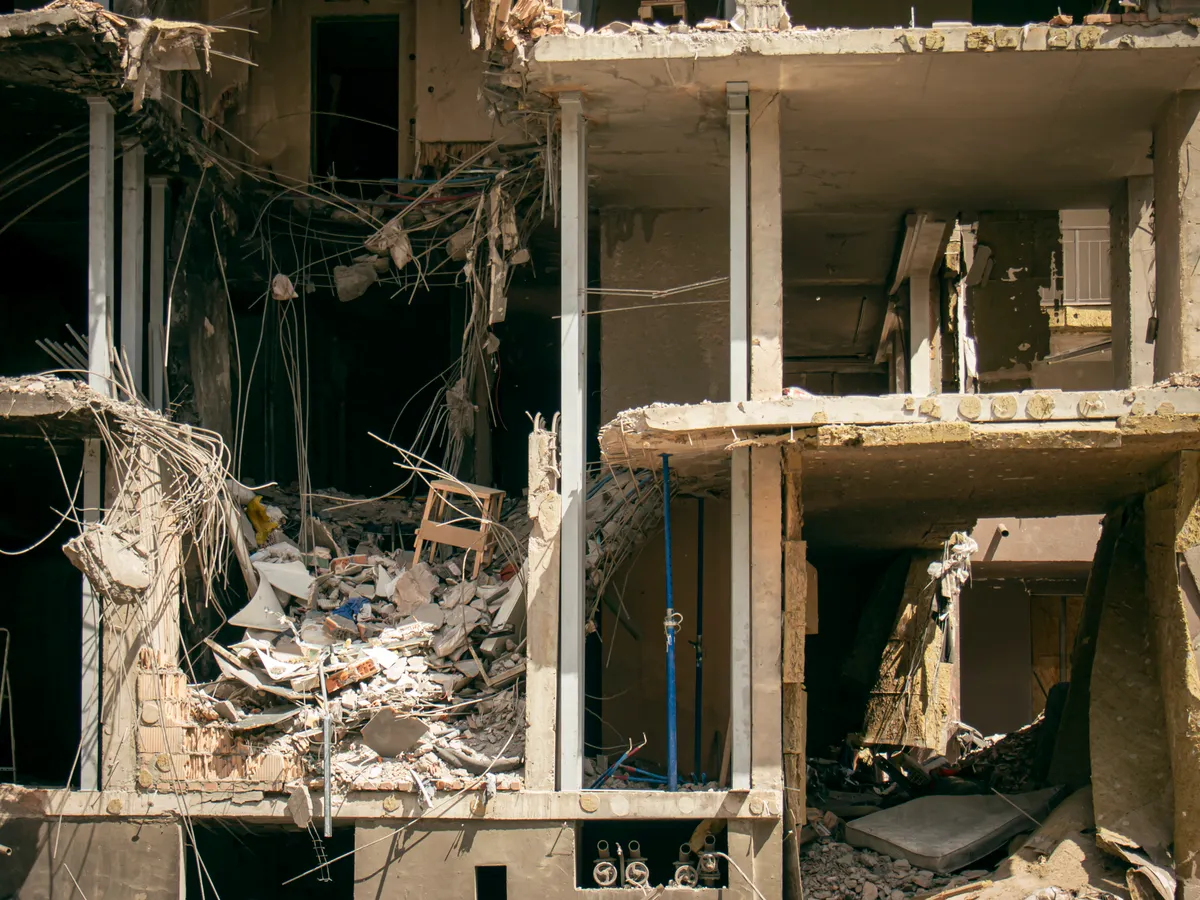
The Flores earthquake death toll has climbed to at least 38 after a magnitude-7.7 tremor struck the Indonesian island of Flores shortly before 05:00 local time on Saturday, with the count still rising as search and rescue teams push into remote, mountainous terrain, the country’s disaster mitigation agency BNPB has said.
Quake strikes before dawn
The earthquake hit at around 22:00 GMT on Friday. Indonesia’s meteorology and geophysics agency put the depth at 15 kilometres, though Al Jazeera reported that the United States Geological Survey placed the depth at 10 kilometres. The shallower an earthquake, the more destructive its effects on the surface tend to be. The epicentre was approximately 68 kilometres north-northwest of the city of Ende in East Nusa Tenggara province, Al Jazeera added.
Emanuel Melkiades Laka Lena, governor of East Nusa Tenggara province, told a news conference that many victims were killed in their sleep by collapsing rubble. BNPB said several people had been injured to varying degrees, with at least two seriously hurt and 11 slightly injured. Buildings across the region were damaged both by the initial jolt and by the dozens of aftershocks that followed.
Flores earthquake death toll broken down by province
BNPB recorded six deaths in Manggarai province, five in East Manggarai province, and three in Sikka province, with the agency identifying Manggarai as among the most heavily affected areas. Preliminary reports indicated 54 houses had been severely damaged, along with five healthcare facilities, three places of worship, six government buildings, an educational institution and a warehouse.
The full scale of the destruction is not yet clear. The affected region is remote and mountainous, slowing assessment work.
Aftershocks rattled the island in rapid succession
The main shock was swiftly followed by a sequence of strong aftershocks. According to Watchers.news, three aftershocks had been recorded by 22:28 UTC: a magnitude-5.9 at 22:13 UTC, a magnitude-5.6 at 22:18 UTC, and a magnitude-6.1 at 22:28 UTC. The magnitude-6.1 aftershock was also felt strongly in the same area, compounding the damage.
Arnold Welianto, who lives in Talibura, a village near the coastline in Sikka, said he was awoken by the ‘very strong shaking’. ‘I was startled awake and immediately went to my child’s room,’ he told the BBC. He said many residents had already fled into the hills, while others were standing along the roadside because the sea had visibly receded. ‘The water remained low for quite some time, so everyone panicked and ran,’ he said. He added that people at the local community health centre had already been evacuated by the time he reached it.
Welianto said residents of Talibura were choosing to remain outdoors, too afraid of the ongoing aftershocks to return to their homes.
Tsunami warning issued then lifted
Authorities issued a tsunami warning following the quake. It was lifted around three hours after the initial jolt when no significant sea level rise was detected. BNPB said 2,000 people had evacuated or relocated on their own during that period. Video from the port in Maumere showed large chunks of concrete breaking off the terminal building and falling onto passengers waiting to board an inter-island ferry. Some were thrown into the sea when the gangway to a ship collapsed.
A stream of people was seen moving inland on motorbikes after the warning was issued. BNPB advised people to remain calm and to stay away from coastal areas and structures showing signs of damage.
Eyewitness accounts from the affected region
Yulian Juita Ekalia, a university lecturer from Ruteng, a city to the west of the epicentre, told news agency AFP she had dragged her stove outside and was cooking there, too afraid to stay indoors after the tremors. ‘I have never felt an earthquake this big,’ she said. ‘It felt like we were on a trampoline – it was really scary.’
Indonesia lies along the meeting point of three major tectonic plates, making it one of the world’s most earthquake-prone nations. BNPB said its search and rescue operation was under way, with the Flores earthquake death toll expected to rise further as teams reach more remote communities.