Videos obtained by the BBC show Omar al-Bayoumi, the man at the centre of a $1 trillion 9/11 lawsuit brought by victims’ families against Saudi Arabia, embracing a future al-Qaeda leader and paintballing with a Saudi government official, footage the FBI held within days of the 2001 attacks but never fully pursued.
The clips form part of the 9/11 families’ legal action against Saudi Arabia, which argues the kingdom was complicit in the attacks. They have never previously been shown publicly.
Omar al-Bayoumi 9/11 lawsuit: what the videos show
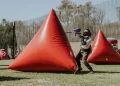
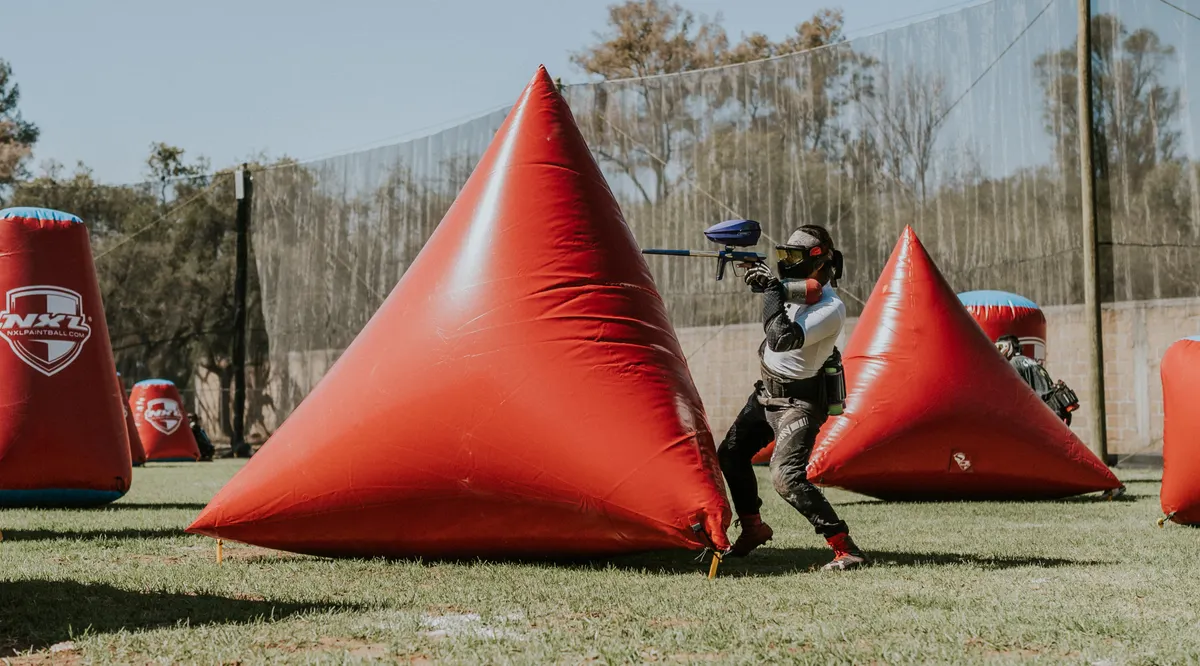
One clip, filmed in 1997 or early 1998, shows Bayoumi and Anwar al-Awlaki paintballing near San Diego alongside an official from Saudi Arabia’s Ministry of Islamic Affairs. Men in military fatigues engage in urban combat scenes and target practice. At one point, some charge forward shouting ‘Allahu Akbar’. Bayoumi addresses Awlaki as ‘Sheikh Anwar’ on the recording.
A second clip shows Bayoumi embracing Awlaki in January 1998. Further footage records Bayoumi’s meetings with officials and preachers from the Ministry of Islamic Affairs, including a scene at SeaWorld. Bayoumi passes his camera to his son before stepping into shot alongside two ministry officials, one holding a clipboard.
Bayoumi, when questioned in the 9/11 families’ lawsuit in 2021, insisted he had never met Awlaki. The video evidence contradicting that claim was made available, confidentially, to the court a year later, and placed on the public docket on 4 September this year.
Awlaki was killed in a CIA drone strike in 2011. Saudi Arabia has stated the paintball video does not reveal who made or took it.
Intelligence asset claim and the plane diagram
Bayoumi’s connections to the Saudi state run deeper than the videos alone suggest. According to ProPublica, Bayoumi operated as a Saudi intelligence asset, working closely with Saudi religious officials and collaborating with several clerics who would later emerge as militant Islamists tied to al-Qaida. That account sits alongside the BBC’s own findings that Bayoumi’s phone book, seized by British police after the attacks, contained more than two dozen names of Saudi government officials in the US and Saudi Arabia.
Among the evidence found at his Birmingham properties after his arrest on 21 September 2001 was a yellow lined notebook page carrying a sketch of a plane and a flight descent equation written in Bayoumi’s own handwriting. The equation indicates the height and distance required for a pilot to guide an aircraft to a given object on the ground.
Jodi Westbrook Flowers, a member of the 9/11 families’ legal team, told the BBC: ‘It’s the mathematical calculation of the crash. When we figured out what it was, we knew that it was the smoking gun that we’d been looking for.’
Last year, the federal judge in the families’ lawsuit found the notebook page, on its face, ‘connects Bayoumi with knowledge of the 9/11 Attacks’. Yet the diagram was never shown to British detectives questioning Bayoumi at Paddington Green Police Station, was kept from some FBI agents investigating him, and was not passed to the 9/11 Commission.
Blocked interviews and the decision not to prosecute
Rick Lambert, who ran the FBI’s investigation in San Diego, told the BBC his office made repeated requests to New York, which was in overall charge, to send copies of all the evidence seized in Birmingham. New York did not comply. Lambert said: ‘I believe there is the potential that had we received that evidence and analysed it, that we would have been able to put the pieces of the puzzle together much more quickly.’
Both the San Diego and Los Angeles FBI offices were blocked from interviewing Bayoumi’s Saudi government contacts. Steve Moore, who oversaw the FBI’s 9/11 investigation in Los Angeles, said his team made repeated requests to interview one Saudi religious diplomat. ‘We hit a roadblock so hard, I think we all had airbag burns,’ he said.
Jeffrey Breinholt, then the deputy director of counter-terrorism at the Department of Justice, told the BBC Bayoumi’s name had come up ‘as one of the hot possibilities for charges’, but the New York Attorney’s Office never sent a proposed prosecution to him for approval. Had they done so, the plane diagram would have been central evidence. ‘We’ve convicted people for less,’ he said. Of the paintballing footage and Awlaki’s presence, Breinholt added: ‘I think it would be a material support charge against Bayoumi.’
Bayoumi was released on 28 September 2001 without charge. When the 9/11 Commission interviewed him in Riyadh in October 2003, in the presence of Saudi secret police, he was told that ‘no-one believes he knowingly helped the hijackers carry out their terrorist mission’. The Commission never saw the plane diagram, the paintballing video, or much of the other evidence seized in Birmingham. Its published report in July 2004 described Bayoumi as ‘obliging and gregarious’ and found no evidence of extremist views.
Bayoumi and the Saudi government did not respond to the BBC’s requests for comment. Both have consistently denied any involvement in, or prior knowledge of, the attacks. The FBI and the Metropolitan Police also declined to comment, citing the ongoing legal proceedings. The BBC Panorama documentary is available to watch on iPlayer now.