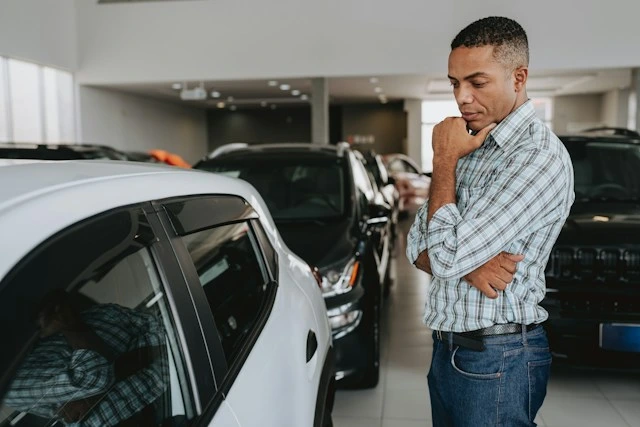
Saturday morning. The car’s a two-hour drive away, the photos look great, and the price feels a bit too kind. Sound familiar? Before you set off, remember that buying a used car starts at home. The advert, the MOT records and a handful of questions to the seller can often tell you whether the journey’s worth it at all.
Then, when you finally get there, don’t rush.
Clean seats and freshly polished paint make a good first impression. Fine. But they won’t reveal an overdue timing belt, or explain why the mileage recorded at last year’s MOT is higher than it is today.
So let’s go through it properly, from first enquiry to picking up the keys.
Ask the Questions Early
Start with the registration number; request it if it’s missing from the advert. Ask the seller to confirm the current mileage and the service history while you’re at it.
Then send a few simple questions:
- How long have you had it?
- What’s the reason for selling?
- Are there any faults or warning lights?
- Any accident repairs?
- What recent maintenance has it had?
- Are both keys included?
Later on, you’ll compare these answers with the car and its paperwork. Push for detail where it’s fuzzy. Is “recently serviced” a documented garage job, or someone changing the oil on the driveway? Only one way to find out. Ask.
Save the advert, too. If the details change, you’ll have the original.
Do the Homework First
Imagine losing your whole Saturday to a car whose records had red flags you could’ve spotted from the kitchen table. Annoying, right?
A registration search through Full Car Checks covers MOT history, tax status, recorded mileage and vehicle details. If outstanding finance, recorded insurance write-offs or stolen markers are on your mind, check what the paid reports include.
Then read every MOT, not just the latest pass.
Repeated tyre-wear advisories across consecutive tests? Ask whether the tyres have been replaced. Corrosion noted? Find out where it is and what’s been done. Advisories can be minor. They can also hint at costs you haven’t planned for.
Be careful with mileage. The readings should make sense in date order. A lower number than the one before might be a recording error, but get a credible explanation and supporting evidence before you go any further.
Budget Beyond the Sticker Price
The asking price? That’s just the beginning.
Get an insurance quote before you grow attached. Look at servicing, tyres and any major maintenance coming due. Two cars advertised at the same price can leave you facing very different bills over the next six months.
Line up similar examples with the same engine and specification. Mileage matters, but condition matters too. A higher-mileage car with consistent servicing may well beat a low-mileage one with little paperwork.
And if a price looks unusually low, ask why. A seller might just want a quick sale. Or the saving might evaporate the moment a garage looks underneath.
Choose Your Viewing Conditions
Dark, wet weekday evening? Not ideal. Water can disguise marks, and dim light makes it tricky to see where paint doesn’t quite match.
Walk around the car before getting in. Look along the panels for dents and uneven reflections. Check the gaps around the bonnet, doors and boot, and look for stray paint on rubber seals or trim.
Signs of repair aren’t a reason to run. Lots of cars have had small bodywork jobs. The real test is whether the seller’s explanation fits what’s in front of you.
Inspect the tyres. Uneven wear, damaged sidewalls or tyres nearing replacement are all fair game for questions.
Inside, try everything: windows, air conditioning, parking sensors, central locking. It’s strangely easy to get absorbed in engine talk and forget the features you’d use daily.
Listen to a Cold Start
Try to arrange for the engine to be cold when you arrive.
As it starts, listen carefully while it settles into idle. Persistent rattles, knocking or unusual smoke are worth noting, and so are warning lights that stay on.
That said, a warm engine isn’t evidence of foul play. Maybe the seller used it that morning. Still, if you asked for a cold start and it’s already running when you get there, ask about it.
Check accessible fluid levels when it’s safe to do so, following the handbook. Never open the coolant reservoir while the engine is hot.
Can’t place a noise? You don’t need to. If something worries you, get a mechanic to look.
Test Drive Like You Mean It
A five-minute loop shows the car moves. It won’t show how it handles at higher speeds, or once it’s fully warmed up.
Check you’ve got suitable insurance first. Then drive a mix of roads, with the radio off for part of the time.
Pay attention. Does the steering feel steady? Are the gear changes smooth? Does it hesitate when you accelerate? Any knocks over bumps or vibration when you brake?
Comfort is the other half of buying a used car. Can you see properly at junctions? Is the driving position right for you? A car can be mechanically sound and still not be the one for you.
Once you’re back, have another look for warning lights or fresh leaks.
Don’t Take “Full Service History” on Trust
Ask to see the records.
They could be a stamped service book, invoices or digital records. Whatever they are, check the dates, mileages and work completed. Receipts only count if they belong to the car you’re buying.
Has the engine got a timing belt? Find out the replacement interval and look for evidence it’s been changed. Ask about other scheduled maintenance for that model too.
Missing paperwork doesn’t prove maintenance was skipped. It just leaves you with less evidence, and that should influence your decision.
Check the Paperwork Against the Car
Ask to see the original V5C log book and compare its details with the vehicle. Check the vehicle identification number as well, rather than relying solely on the number plate.
Here’s where people trip up: the V5C names the registered keeper, but it isn’t proof of ownership. Ask who owns the car and whether the person selling it has the right to.
The official GOV.UK advice on buying a used vehicle explains the document and identity checks to make.
Something doesn’t match? Get it explained before any money moves. “We’ll sort it out later” is the wrong answer at this stage.
Final Steps Before Driving Away
Agree what comes with the car. Put any promised work in writing, and if the seller says they’ll replace a tyre or fix a warning light, make sure it’s done before collection.
Get a receipt with the registration, price, date, and both your details and the seller’s. Store it alongside the advert, your messages and the supporting documents.
Make sure the keeper transfer is handled, and arrange insurance and vehicle tax before you leave. The seller’s tax doesn’t pass on to you.
One last thought on buying a used car: you can always say no. A long journey, money spent on checks, picturing it outside your house… none of it makes the car right if important questions are still open.
There are always more cars out there. Better another viewing than a purchase you’re already second-guessing.