Primark has announced plans to offer home delivery in the UK for the first time, ending years of resistance to a full online shopping service that analysts say was driven by mounting pressure from ultra-fast-fashion rivals.
Associated British Foods (ABF), which owns Primark, confirmed the service would launch ‘in the future’ for customers in England, Scotland and Wales. No date was given. Northern Ireland, home to nearly two million residents, was not included in the announcement.
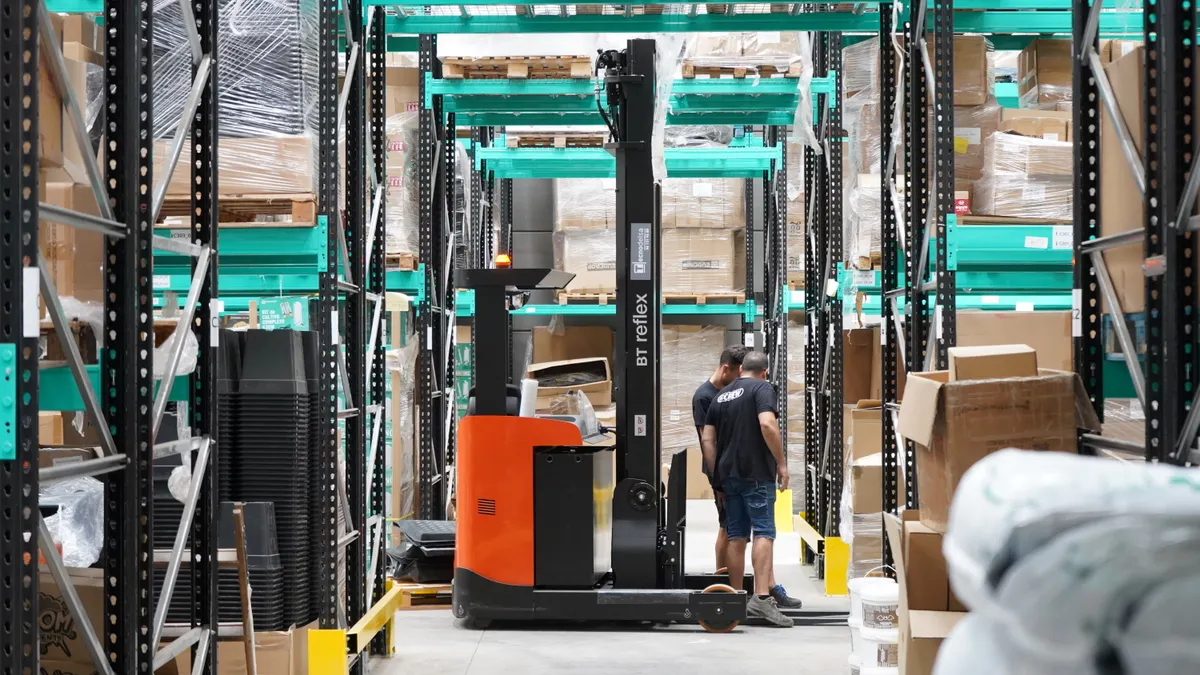
£90 million Sheffield warehouse to support Primark home delivery UK rollout
To underpin the plans, ABF said it had acquired a highly automated warehouse in Sheffield, purchased from the Debenhams Group for £90 million. The company said the acquisition was not expected to affect jobs.
Primark had long argued that home delivery was uneconomical given its low price points. The retailer only moved online for the first time in 2022, when it launched a click-and-collect service, according to BBC News. Before that, it had no online sales capability at all, including throughout the pandemic.
Analysts said the decision to finally offer home delivery, after years of holding out, indicated Primark was facing pressure from ultra-fast-fashion brands such as Shein, BBC News reported.
Sales dip and hot weather weigh on trading update
The announcement came alongside a trading update in which ABF said Primark sales are expected to have dipped 2.6 per cent on a like-for-like basis over the past financial year, which ends on Saturday. The decline was attributed to weaker sales in continental Europe. UK sales, by contrast, are estimated to have edged up by 0.6 per cent year-on-year.
Primark said sales began the summer season strongly before being hit by prolonged hot weather, which delayed customers from switching to autumn clothing ranges. Trading improved in more recent weeks as temperatures cooled, the company said.
ABF chief executive George Weston said: ‘Our priority focus areas, the UK and womenswear, continued to outperform our other markets and categories. Primark has made significant progress in building its digital capabilities and will continue this through both growing click and collect and by offering home delivery in Great Britain in the future. There is now an opportunity for incremental and profitable growth through this channel.’
The retailer also recently unveiled price cuts on hundreds of fashion items, a move it said had generated positive sales momentum, particularly in nightwear, leisure and fitness ranges.
Reaction and broader ABF pressures
Dan Coatsworth, head of markets for AJ Bell, described the move as the ‘biggest UK retail news of the year’. ‘Having full online transactional capabilities is something the company has always shied away from,’ he said. ‘It has always argued that low price-point items are uneconomical to send, particularly if someone is only ordering a pair of socks or a T-shirt costing a pound or two. It stubbornly retained this view for longer than anyone expected, before easing back by launching a click and collect service. We’re now primed for the full home delivery experience.’
Coatsworth added: ‘While physical stores remain relevant, online shopping is well established and Primark clearly had no choice but to adapt to the modern retail world.’
Separately, ABF warned that adjusted operating profits for its food division are expected to come in slightly below previous expectations for the full year. It said Twinings sales had been dampened by heatwaves reducing demand for hot tea. Its sugar business has also been hit by higher gas costs linked to the Middle East conflict, as well as dry weather affecting the UK beet crop. ABF said it expects to report an adjusted operating loss for its sugar division towards the higher end of its guidance range of £25 million to £60 million.
ABF brands in the grocery sector include Kingsmill, Twinings, Jordans, Patak’s and, following a recent acquisition, Hovis.
Shares in ABF were down around 9 per cent in early trading on Thursday.
ABF is also preparing to separate Primark from its food operations and list it on the FTSE 100 as a standalone entity by the end of 2027.