The High Fens wildfire in Belgium has scorched approximately 3,000 hectares of the country’s largest nature reserve, with the blaze described by regional authorities as the worst in the country’s recent history, according to France 24.
The fire began on Friday and was still out of control as of Saturday afternoon, consuming a third of the High Fens park near Belgium’s eastern border with Germany. Residents in two nearby villages were ordered to evacuate as local officials warned the flames could reach homes.
Evacuations and overnight response to High Fens wildfire Belgium
About 600 residents of the villages of Sourbrodt and Bütgenbach were forced to leave their homes on Saturday, according to the Brussels Times. A nearby gymnasium was opened to accommodate evacuees. Around 20 of those displaced remained overnight at a reception centre in Malmedy and were still unable to return home.
More than 250 emergency workers battled the blaze through the night, the Brussels Times reported. Firefighters faced significant challenges from the park’s terrain, which consists of bog-like territory, moorland and forests.
Nicolas Yernaux, a spokesperson for the regional authorities in Wallonia, said the fire was the country’s ‘largest in recent history.’ He added: ‘There is a risk that the fire could reach homes, but we are deploying all available resources to protect them.’
Yernaux said firefighters had ‘allowed parts of the heathland to burn because the area is very difficult to access,’ with weather conditions and terrain both hampering efforts to bring the fire under control.
Gregory Melotte, one of those working to extinguish the blaze, told Belgian broadcaster RTBF: ‘We managed to calm the fire coming from the plain, to prevent it from spreading into the fir forest. We still succeeded in our mission, but it’s not over yet. The flames are coming towards us, the wind has shifted twice, once in our favour, once against us.’
EU civil protection mechanism activated as aircraft arrive
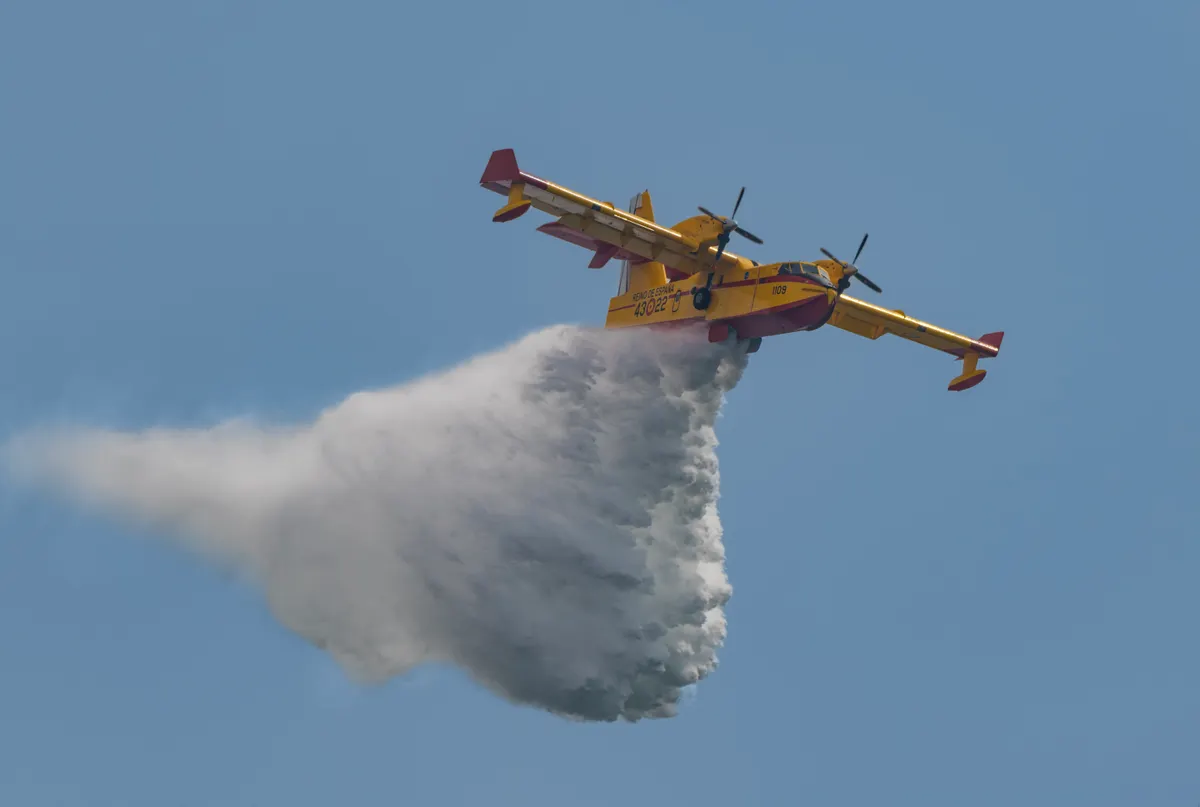
Belgium activated the European Union’s civil protection mechanism to draw in reinforcements from neighbouring countries. European Commissioner Hadja Lahbib confirmed that two Swedish water-bombing aircraft and two helicopters, one from the Czech Republic and one from the Netherlands, were on their way to assist.
Water-bombing aircraft and helicopters were dispatched from across Europe to support firefighters working in and around the park.
The High Fens wildfire in Belgium is one of several burning across the continent. In south-western France, a forest fire in Landes caused around 650 residents to leave their homes. That blaze began on Thursday and, according to authorities, reignited on Saturday, with more than 500 firefighters deployed to tackle it.
Forest fires have also been reported in Croatia, Spain and Serbia since Friday, following a summer of extreme heat that has left swathes of land across Europe scorched.
The EU’s climate monitoring service, Copernicus, has confirmed that western Europe experienced its hottest June-to-July period on record, a backdrop that has intensified fire conditions across the region.
Belgian authorities said all available resources remained deployed to prevent the High Fens wildfire from spreading to residential areas, with the situation continuing to evolve as firefighters worked to establish control lines through difficult terrain.