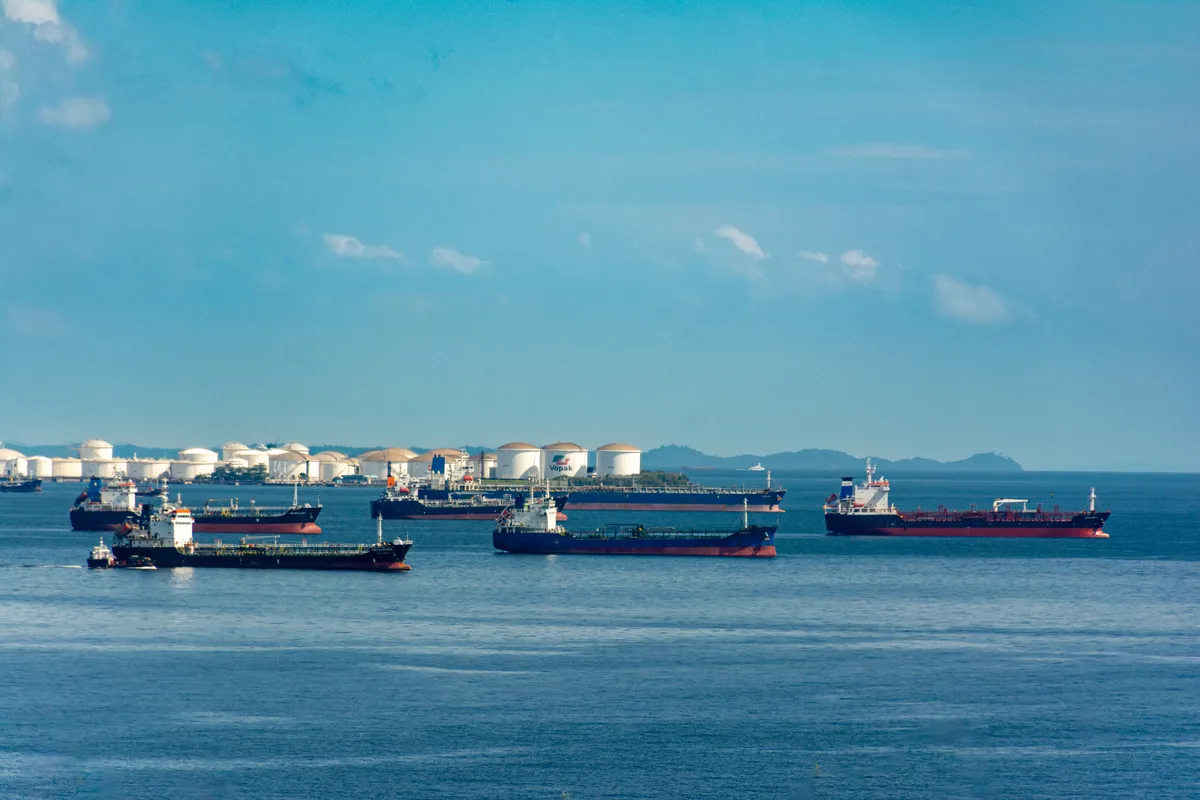
Royal Marine Commandos and National Crime Agency officers conducted the first Russian shadow fleet boarding by UK forces in the English Channel in the early hours of Sunday, Sir Keir Starmer has confirmed.
The operation targeted the tanker Smyrtos, lasting six hours and supported by the RAF. The vessel will be held and monitored off the south coast of England while investigations continue, the Ministry of Defence said.
How the Russian Shadow Fleet Boarding Unfolded
According to tracking website MarineTraffic, Smyrtos sails under a Cameroon flag and was at anchor off the coast of Weymouth at the time of the operation. BBC Verify found the vessel began its journey on 5 June from Russia’s Ust-Luga port, an oil terminal near St. Petersburg, before crossing west into the Channel on Saturday.
The Smyrtos was sanctioned in July 2025. Since then it has changed its name from Myrtos to Smyrtos, and has changed the flag it sails under twice.
Al Carns, who resigned as armed forces minister last week, told the BBC the operation would have involved armed forces personnel ‘flying low level over the sea, rearing up before the ship, fast roping onto the ship, securing it and then taking it into our territorial waters’. He said that now the UK had performed its first boarding of a Russian shadow fleet vessel, ‘we’re probably going to see more, should the opportunities present themselves’.
The operation was supported by aircraft from the Maritime Air Group, an RAF P-8 aircraft, as well as HMS Sutherland and HMS Ledbury. It was conducted in close co-ordination with the French, the MoD said.
Sir Keir said: ‘This successful operation delivers yet another blow to Russia and reminds those fuelling Putin’s war in Ukraine that we will not let them hide.’
Shadow Fleet Scale and UK Sanctions
Russia has been operating a shadow fleet of tankers to evade international sanctions on its oil exports. The fleet numbers over 700 vessels and is responsible for carrying 75% of Russia’s sanctioned oil, providing what the MoD described as a critical lifeline for the Kremlin.
The MoD said the UK has sanctioned more than 500 vessels. Those sanctions ban ships from entering UK ports and prohibit British firms and individuals from providing financial, insurance, or brokerage services to vessels that supply or deliver Russian oil. The government has said it is targeting Russia’s oil revenues to ‘choke off funding for Russia’s war machine’ in Ukraine.
The prime minister announced in March that Royal Marines and other British armed forces were ‘now able to board sanctioned vessels that are passing through our waters’.
Attorney General Richard Hermer said: ‘This government made clear that we would pursue Russia’s shadow fleet under the full force of international law.’
Political Context: Defence Resignations Overshadow the Operation
Sunday’s interception comes after a turbulent week in which two ministers quit over the government’s defence investment plan (DIP), which is set to be published before the Nato summit next month after months of delay.
John Healey resigned as defence secretary on Thursday, warning that the level of military spending proposed by Sir Keir ‘falls well short’ of what is needed to protect the UK. Carns also resigned as armed forces minister, telling the prime minister the DIP was ‘neither transformative enough nor sufficiently funded’.
Culture Secretary Lisa Nandy told the BBC the prime minister ‘had been clear’ with his cabinet that they ‘had to find more money for defence’, adding that discussions on the DIP were ongoing. She told Sunday with Laura Kuenssberg the government had to ‘transform the way we do defence spending, so that what we’re spending is fit for the threats we face now and in the future’.
The Sunday operation also builds on a prior Franco-British effort: French President Emmanuel Macron said on 1 June that France’s military had intercepted a sanctioned oil tanker suspected of being part of Russia’s shadow fleet, with a British helicopter providing support during that operation.